
Deploying a high-performance cement retarder for oil field operations is essential in deep well construction because elevated bottom-hole static temperatures (BHST) and confining downhole pressures accelerate cement hydration kinetics, risking premature flash setting and lost casing integrity across high-pressure basins in the Middle East, the North Sea, and the Gulf of Mexico. By extending the slurry thickening time and maintaining low consistency during dynamic placement, an advanced cement retarder for oil field applications provides the necessary pumping safety margin-typically 90 to 120 minutes beyond planned displacement schedules-allowing Class G and Class H cement slurries to be mixed, pumped, and placed across extended-reach intervals before undergoing rapid compressive strength development.

The Critical Operational Role of Cement Retarders in Oilfield Drilling
In upstream well cementing, controlling the timing of cement hydration is just as critical as achieving final compressive strength. As drilling operations penetrate deeper formations, geothermal gradients elevate bottom-hole temperatures well above 100°C to 180°C (212°F to 356°F). Under these severe thermal conditions, Portland cement components-specifically tricalcium aluminate (C₃A) and tricalcium silicate (C₃S)-hydrate rapidly. Without the intervention of an engineered cement retarder for oil field applications, the slurry loses pumpability within minutes, causing severe operational disruptions.
Slurry placement failures carry catastrophic financial and technical consequences. If a cement system sets prematurely inside the drill pipe or casing string, the resulting flash setting locks up the tubulars, plugging surface manifolds and requiring extensive sidetracking or total well abandonment. Conversely, if an inappropriate retarder causes excessive setting delay, the slurry remains fluid for an extended duration, causing hydrostatic pressure decay that invites formation gas to channel through the annular column. Utilizing a certified cement retarder for oil field formulations ensures that thickening time curves strictly conform to API Specification 10A and API Recommended Practice 10B-2 standards.
The primary operational benefit of an advanced cement retarder for oil field systems is the predictability it provides during slurry placement. By temporarily suppressing the dormant hydration phase, the retarder guarantees consistent fluid rheology, allowing the slurry to displace drilling mud effectively, establish strong shear bonding against casing steel, and achieve long-term zonal isolation across permeable hydrocarbon reservoirs.
Chemical Classification and Mechanisms of Oilfield Cement Retarders
To address diverse geothermal regimes and brine conditions, various chemical families have been developed. Each class of cement retarder for oil field applications provides unique molecular mechanisms that govern cement grain hydration:
1. Modified Lignosulfonates
Purified calcium and sodium lignosulfonates represent the traditional standard in the industry. Highly effective at temperatures between 40°C and 120°C (104°F to 248°F), this type of cement retarder for oil field slurries provides moderate secondary dispersing capabilities. Lignosulfonates adsorb onto hydrating C₃A surfaces, retarding initial gel structure formation while enhancing final compressive strength development once hydration resumes.
2. Hydroxycarboxylic Acids and Organic Salts
Citric acid, tartaric acid, and gluconic acid derivatives operate through powerful calcium chelation mechanisms. By forming stable coordination complexes with calcium ions (Ca²⁺) in the pore solution, this cement retarder for oil field slurries delays calcium hydroxide [Ca(OH)₂] precipitation. In addition to extending thickening time, hydroxycarboxylic acids act as strong dispersants, reducing plastic viscosity in heavy slurry designs.
3. Synthetic Polymers and AMPS Terpolymers
Modern ultra-deep well operations demand synthetic copolymer and terpolymer chemistry. Formulated with 2-acrylamido-2-methylpropane sulfonic acid (AMPS), acrylic acid, and itaconic monomers, a synthetic cement retarder for oil field applications maintains thermal stability above 200°C (392°F). These polymers do not decompose under high shear, providing linear, non-peaking thickening curves even in high-salinity brine environments.

4. Organophosphonates and Saccharide Compounds
Aminotris(methylenephosphonic acid) (ATMP) and sodium glucoheptonate are specialized retarder chemistries that exhibit extreme temperature resistance. Acting as a threshold scale inhibitor and nucleation disruptor, an organophosphonate cement retarder for oil field operations prevents the growth of early calcium silicate hydrate (C‑S‑H) crystal lattices, making it ideal for deep liner cementing across severe HPHT intervals.
Comparative Technical Specifications of Oilfield Retarder Chemistries
Selecting the appropriate cement retarder for oil field formulations requires aligning chemical functionality with bottom-hole circulating temperature (BHCT) and water chemistry. The table below compares the active chemistry, temperature thresholds, and operational benefits of core retarder types:
Regional Application Case: Deep Sour Gas Production Liner Cementing in the South Ghawar Field, Eastern Province, Saudi Arabia
Case Application: South Ghawar Field, Eastern Province, Saudi Arabia

Target Formation: Deep HPHT Khuff Sour Gas Carbonates (High H₂S, CO₂ & Extreme Temperature)
Regional Cementing Background in Saudi Arabian Deep Gas Operations
In the Eastern Province of Saudi Arabia, deep exploration and development wells in the South Ghawar concession penetrate massive Permian Khuff carbonate reservoirs situated below interbedded evaporite salt beds. Total vertical depths (TVD) regularly exceed 4,800 meters (15,700 feet), where bottom-hole static temperatures climb to 165°C to 175°C (329°F to 347°F) with confining formation pressures surpassing 12,000 psi (82.7 MPa). The reservoir fluid contains high concentrations of corrosive H₂S (up to 18%) and CO₂ (up to 10%), requiring dense, gas-impermeable Class G slurries formulated with an advanced cement retarder for oil field operations.
Regional Cementing Challenges in Extreme HPHT Formations
Operators in South Ghawar encounter critical technical challenges during deep 7-inch production liner cementing:
- Severe Retarder Sensitivity: At temperatures above 160°C, traditional retarders exhibit non-linear response curves. Minor concentration shifts of 0.05% BWOC can trigger either premature flash setting or severe 24-hour setting delays.
- Narrow Mud Weight Operating Window: The margin between formation pore pressure and fracture breakdown pressure is extremely tight, demanding a low-viscosity slurry that prevents equivalent circulating density (ECD) pressure spikes.
- Risk of Sour Gas Channeling: An extended transition time during slurry phase changes allows sour gas to breach the decaying hydrostatic column, creating sustained casing pressure (SCP).
Technical Requirements for High-Temperature Slurry Qualification
To qualify a heavy 1.95 g/cm³ (16.3 ppg) Class G slurry system across the Khuff formation, the operator established strict performance criteria for the cement retarder for oil field testing program:
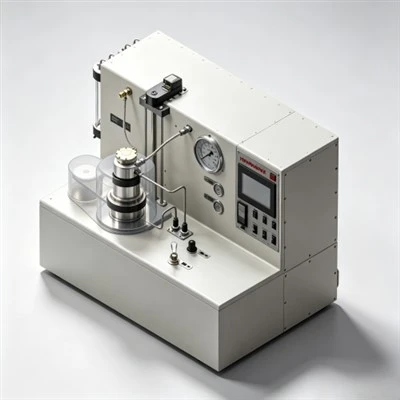
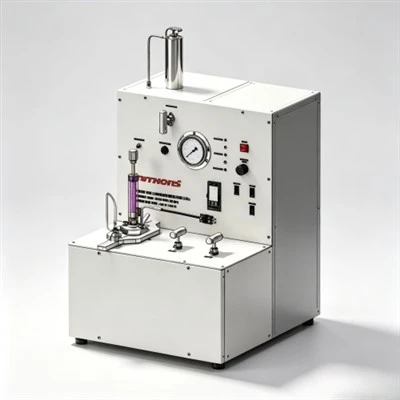
- Thickening time validation on an HPHT consistometer confirming 5.5 hours of pumpability to 70 Bearden units of Consistency (Bc) under simulated dynamic thermal schedules.
- API fluid loss control below 35 mL/30 min at 165°C using an automated high-temperature fluid loss cell to prevent dehydration.
- Static gel strength (SGS) transition window (from 100 to 500 lbf/100 ft²) of less than 30 minutes, with 24-hour compressive strength exceeding 3,500 psi (24.1 MPa).
How Specialized Retarder Technology Addressed the Challenge
Using KELIOIL synthetic AMPS-copolymer cement retarder for oil field applications paired with salt-resistant fluid loss additives and 35% BWOC silica flour, cementing chemists developed an optimized slurry formulation. Consistometer testing confirmed an exact thickening time of 5 hours and 42 minutes to 70 Bc, providing a reliable 120-minute safety cushion over planned displacement operations. Viscometer modeling proved the slurry maintained stable laminar rheology without excessive gelation spikes.
Ultrasonic cement analyzer (UCA) logging verified that the slurry passed through the critical gas migration window in 24 minutes and reached 3,750 psi compressive strength under simulated reservoir curing conditions. When pumped across the 1,150-meter liner in South Ghawar, the slurry displaced drilling fluids cleanly. Post-job radial acoustic cement bond logs (CBL-VDL) confirmed 100% circumferential bonding and zero sustained annular pressure, proving that precise chemical control with a high-grade cement retarder for oil field operations guarantees well integrity in extreme HPHT plays.
Laboratory Testing and Quality Assurance Protocols for Oilfield Retarders
Ensuring repeatable performance with a cement retarder for oil field operations requires rigorous laboratory verification prior to field deployment:
- Testing with Field Mix Water and Cement Batches: Always evaluate the cement retarder for oil field slurries using actual rig mix water and representative samples of delivered Class G cement. Dissolved sulfate, magnesium, and pH variations in local mix water significantly alter retarder adsorption efficiency.
- Accurate BHCT Simulation on HPHT Consistometers: Calibrate temperature and pressure ramp schedules to replicate dynamic bottom-hole circulating temperature (BHCT) rather than static temperature, ensuring the cement retarder for oil field slurries maintains pumpability throughout casing transit.
- Dispersant and Retarder Compatibility Checks: Perform multi-speed rotational viscometer tests to verify that the cement retarder for oil field slurries does not experience competitive adsorption with sulfonated dispersants, which could cause viscosity spikes.
- Continuous Ultrasonic Compressive Strength Logging: Verify that the selected cement retarder for oil field formulations allows rapid compressive strength development (reaching > 500 psi within 12 hours) once dynamic pumping ceases.
Frequently Asked Questions (FAQ) Regarding Oilfield Cement Retarders
1. Why is a synthetic polymer retarder preferred over lignosulfonates in ultra-deep wells?
Lignosulfonates decompose thermally at temperatures above 120°C to 135°C (248°F to 275°F), losing retarding efficacy and causing erratic thickening behavior. A synthetic AMPS polymer cement retarder for oil field applications remains thermally stable up to 210°C (410°F), delivering linear, predictable thickening times even in high-salinity brine environments.
2. How does an over-dosage of cement retarder affect well operations?
Over-dosing a cement retarder for oil field slurries excessively delays setting, keeping the cement in a liquid state for 24 to 48 hours or longer. This prolongs expensive rig wait-on-cement (WOC) time, increases particle settling risks, and permits high-pressure formation gas to invade the decaying hydrostatic column.
3. What is the standard thickening time safety buffer used in field operations?
Industry best practice mandates that the thickening time designed with a cement retarder for oil field formulations includes a safety cushion of at least 90 to 120 minutes beyond the calculated total job time (mixing, pumping, displacement, and plug bumping) to account for surface equipment delays.
Strategic Chemical Selection for Long-Term Zonal Isolation
As global drilling programs target deeper, hotter, and operationally more complex reservoirs, selecting the appropriate cement retarder for oil field operations becomes a core engineering priority. Precise chemical retardation eliminates the risks of premature flash setting, minimizes wait-on-cement downtime, and ensures complete mud displacement across narrow annular geometries.
KELIOIL remains dedicated to manufacturing high-performance cement retarder for oil field applications under strict ISO 9001 and API Spec 10A quality control standards. By combining advanced polymer synthesis with extensive laboratory testing expertise, KELIOIL provides operators and cementing service contractors worldwide with dependable chemical solutions that guarantee wellbore integrity, environmental protection, and long-term hydrocarbon asset productivity.
Optimize Your Slurry Thickening Time with KELIOIL Cement Retarders
Our chemical engineering specialists provide custom retarder formulation designs, HPHT consistometer testing validation, and reliable bulk supply of premium cementing additives tailored to demanding onshore and offshore drilling operations.