
Drilling crews optimize dry blending quality by matching additive particle size distributions (PSD) to Portland cement clinker grains, managing aeration volume and pneumatic transfer cycles, and conducting multi-point pre-job sampling to ensure consistent dry blending powdered cement additives throughout bulk plant storage silos. In remote, cold-climate operating environments-such as the Mangystau Region of the Caspian Basin in western Kazakhstan, where surface casing programs must be executed across vast desert locations far from centralized chemical supply hubs-poor blending homogenization induces severe downhole slurry stratification, localized flash setting, and prolonged waiting-on-cement (WOC) intervals. Deploying a free-flowing, non-hygroscopic chemical accelerator powder alongside standardized pneumatic blending protocols guarantees uniform hydration kinetics, delivering rapid compressive strength development exceeding 3.5 MPa (500 psi) in 8 to 11 hours while maintaining safe, predictable slurry pumpability.
Achieving reliable dry blending powdered cement additives is critical for operations where liquid chemical metering on location introduces severe batch-mixing errors or freezing hazards. When chemical accelerators are added as dry powders at the bulk blending plant, pneumatic mixing must create a completely homogeneous dispersion so that every sack of cement pumped downhole contains the exact target additive concentration. Incompetent blending practices result in dry blending powdered cement additives separating during pneumatic transport, generating dangerous "hot spots" of premature gelation in the casing string or unaccelerated slurry pockets that fail to gain structural integrity. Implementing structured quality assurance workflows during bulk plant dry blending powdered cement additives eliminates costly rig standby delays and secures continuous annular zonal containment.
Explore high-performance chemical accelerators and specialized additive formulations engineered for bulk plant blending and low-temperature wellbore barriers:
The Physics of Particle Segregation in Bulk Plant Pneumatic Blending
In oil well cementing, pneumatic bulk plants utilize compressed air to transfer, aerate, and circulate dry powder blends inside vertical silos and scale tanks. While pneumatic circulation provides high throughput, the physical mechanics of dry particulate mixing are governed by granular physics. Standard API Class G or Class A Portland cement has a median particle diameter (D₅₀) typically between 12 and 18 micrometers and an absolute specific gravity of approximately 3.15. When execution teams undertake dry blending powdered cement additives, physical discrepancies between the cement clinker and the chemical powder trigger mechanical segregation.
If dry blending powdered cement additives is performed without strict process controls, three primary segregation mechanisms destabilize the mixture:
- Trajectory Segregation (Inertial Separation): During pneumatic transfer through transfer manifolds, coarser chemical additive particles possess greater kinetic momentum than ultrafine cement grains, traveling farther toward the outer silo walls while fine particles settle directly beneath inlet ports.
- Percolation and Sifting Segregation: When dry blending powdered cement additives, smaller particles filter downward through the void spaces between larger moving particles during vibration or gravity discharge, accumulating in high concentrations at the silo discharge cone.
- Fluidization and Elutriation Segregation: Excessive air injection during dry blending powdered cement additives fluidizes ultra-light powders, causing them to remain suspended in dust collection systems or settle out late atop the bulk blend, destroying batch consistency.
- Hygroscopic Caking and Agglomeration: If chemical accelerator powders absorb trace atmospheric moisture, particle surfaces form liquid bridges that lead to caking. This prevents proper dry blending powdered cement additives, causing unmixed chemical nodules to plug mixing jets at the wellsite.
Engineering Best Practices for Dry Blending Powdered Cement Additives
Eliminating batch variance during dry blending powdered cement additives requires a disciplined engineering protocol that addresses particle selection, equipment configuration, and transfer cycles:
- Granulometric Sieve Matching: Successful dry blending powdered cement additives demands that the accelerator powder be milled to a particle size distribution (D₅₀ 15 to 25 μm) closely matching the host Portland cement clinker. Sieve matching minimizes inertial separation during high-velocity pneumatic transfers.
- Controlled Multi-Pass Pneumatic Transfers: Bulk plant operators must not rely on single-pass pneumatic blowing. Industry best practice mandates multi-pass transfers between scale tanks and storage pods (minimum 3 to 4 complete transfer cycles) using dry, oil-free compressed air (dew point ≤ -40°C) to achieve complete particle interlacing.
- Optimized Aeration Pad Fluidization: Silo aeration pads must be sequenced systematically to prevent localized rat-holing or channeling. Balanced air distribution across the bottom discharge cone ensures mass flow discharge rather than funnel flow during bulk dry blending powdered cement additives.
- Non-Hygroscopic Additive Formulation: Specifying an accelerator powder formulated with anti-caking surface conditioning agents prevents moisture uptake, ensuring free-flowing behavior and uniform distribution during dry blending powdered cement additives even in humid or desert coastal storage yards.
| Bulk Plant Blending Metric | Uncontrolled Single-Pass Blending | Optimized Protocol with CG910S |
|---|---|---|
| Additive Homogeneity Variance (ΔC) | ± 35% – 60% (Severe segregation) | ± 3% – 5% (Precision distribution) |
| Pneumatic Transfer Cycles | 1 Transfer (Insufficient intermixing) | 3 to 4 Metered Cycles |
| Thickening Time Consistency Across Batch | Erratic (± 90 minutes variance) | Uniform (± 10 minutes variance) |
| Powder Anti-Caking & Flowability Index | Prone to severe clumping | High flowability (Carr Index ≤ 12) |
| Downhole Flash Setting / WOC Risk | High operational risk | Eliminated downhole risk |
Harmonizing Dry Blending with Water Temperature and Mixability
Even when bulk plant crews achieve optimal dry blending powdered cement additives, the slurry's final downhole performance remains highly sensitive to surface mixing conditions. When pre-blended cement arrives at the drilling location, the dissolution rate of dry additives is directly influenced by the thermal energy of the field batch water.
By combining rigorous dry blending powdered cement additives with specialized accelerator chemistry, operators ensure that the powdered chemical dissolves rapidly even in cold mixing water. Quality control procedures must adhere strictly to API RP 10B-2 testing standards governed by the American Petroleum Institute (API), verifying that pre-blended cement batches maintain stable thickening time profiles and predictable early compressive strength development under downhole conditions.
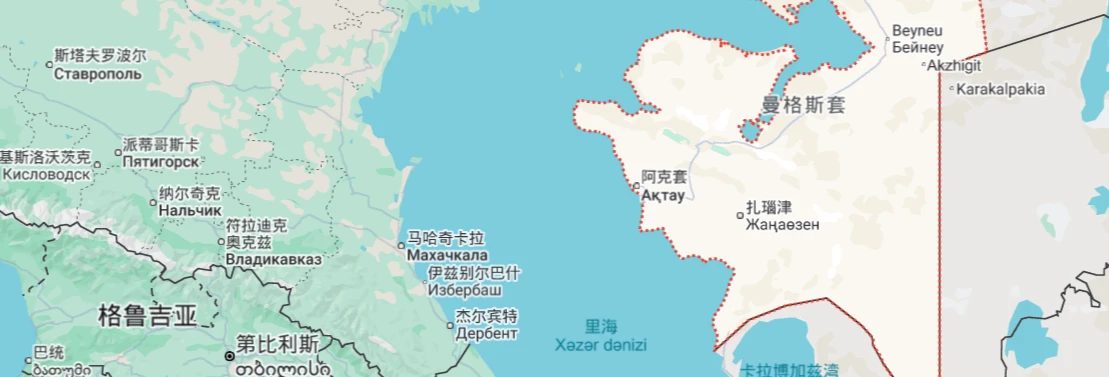
Case Application: Mangystau Region, Caspian Basin, Kazakhstan
Regional Cementing Background in the Mangystau Region
The Mangystau Region of western Kazakhstan, bordering the eastern Caspian Sea, is an established hydrocarbon province characterized by mature oil fields and complex logistical supply chains. Drilling locations are situated in remote desert expanses where cement bulk supply bases in Aktau are located over 250 kilometers from well sites. Surface casing strings are set at depths between 350 meters and 750 meters true vertical depth (TVD) into weakly consolidated sandstones and claystones. Formation temperatures in these shallow sections range from 12°C to 24°C, with severe winter temperatures dropping ambient air to -20°C.
Regional Cementing Challenges in Remote Caspian Operations
Executing surface casing cementing in remote Mangystau fields introduces critical operational difficulties:
- Severe Road Transport Segregation: Transporting bulk dry-blended cement across unpaved desert roads over hundreds of kilometers induces severe vibratory segregation if additive particle sizes and densities are poorly matched.
- Infeasibility of On-Site Liquid Chemical Metering: Field locations lack automated liquid additive injection systems, and sub-zero winter temperatures freeze liquid chemical totes, making dry blending powdered cement additives at the central Aktau bulk plant mandatory.
- Severe Waiting-on-Cement Delays: Chilled wellbore temperatures extend cement setting times. If dry blending powdered cement additives is erratic, unaccelerated slurry sections take over 36 hours to achieve 3.5 MPa compressive strength, causing expensive rig downtime.
Technical Requirements for Kazakhstan Bulk Dry Blending Formulations
To overcome extreme logistical and operational challenges, regional operators establish strict dry-blending performance benchmarks:
- A non-hygroscopic, free-flowing chemical accelerator powder capable of uniform dispersion during pneumatic dry blending powdered cement additives.
- Batch concentration variance (ΔC) restricted to under ± 5% across top, middle, and bottom silo sample points.
- Attainment of 3.5 MPa (500 psi) compressive strength within 9 to 11 hours at 16°C static temperature.
- Stable thickening time maintained between 2.5 and 4.0 hours, with consistency variance under 10 minutes across transport batches.
How CG910S Addresses the Challenge
CG910S Low-Temperature Cementing Accelerator Powder is specifically formulated for optimized dry blending powdered cement additives in bulk operations. Manufactured with an anti-caking surface treatment and precision particle grading matching API Class G clinker, CG910S resists moisture uptake and eliminates vibratory segregation during rough desert transport. It intermixes uniformly into dry cement during pneumatic transfer cycles, ensuring that the blended slurry exhibits identical thickening times and rapid compressive strength development regardless of sampling location.
Regional Application Case
In an onshore surface casing campaign in the Mangystau Region, a 244.5 mm (9-5/8 inch) casing string was cemented inside a 311.1 mm (12-1/4 inch) hole to a total depth of 620 meters TVD. Static bottom-hole temperature was 15°C, and unheated surface mix water sat at 6°C. The slurry was designed at a density of 1880 kg/m³ (15.7 ppg) utilizing API Class G Portland cement dry-blended at the Aktau bulk base and transported 280 kilometers to the rig.
By executing a 3-pass pneumatic blending protocol with CG910S accelerator powder at 2.2% BWOC alongside low-temperature fluid loss polymers and defoamers, the service company achieved outstanding laboratory and field results:
- Blend Homogeneity Verification: Pre-job multi-point sampling from bulk transport trucks (front, middle, rear) demonstrated chemical concentration variance under ± 3.2%, confirming flawless dry blending powdered cement additives.
- Thickening Time Precision: Consistometer testing across truck samples recorded stable 70 Bc thickening times of 3 hours and 15 minutes ± 6 minutes, verifying zero chemical segregation during rough road transit.
- Compressive Strength Growth (UCA): The slurry reached 0.35 MPa (50 psi) initial gel strength in 4 hours and 20 minutes, attaining the mandatory 3.5 MPa (500 psi) threshold at 8 hours and 40 minutes at 15°C static temperature.
- Operational Outcome: The casing was displaced smoothly with full returns. Rig crews safely drilled out the casing shoe 10.5 hours after plug bump, saving 19 hours of rig standby time per well compared to historical offset jobs.
Laboratory Diagnostic Workflows for Dry Blend Quality Assurance
Verifying the quality of dry blending powdered cement additives requires structured laboratory testing workflows conforming to API RP 10B-2 testing protocols:
1. Multi-Point Silo and Bulk Transport Sampling: Quality assurance requires collecting representative dry blend samples using grain thieves from top, middle, and bottom ports of bulk plant silos and transport pods. Evaluating chemical concentrations via X-ray fluorescence (XRF) or gravimetric titration confirms blend homogeneity prior to dispatch.
2. Comparative Thickening Time Benchmarking: Slurry samples prepared from different bulk sampling points must be tested concurrently in pressurized consistometers. Measured thickening time variance exceeding ± 15 minutes indicates particle segregation during dry blending powdered cement additives, requiring re-aeration and additional pneumatic transfer passes.
3. Carr Index and Powder Flowability Characterization: Laboratory evaluation of aerated bulk density, packed bulk density, and angle of repose determines the Carr Compressibility Index. Maintaining a Carr Index below 15 ensures superior flowability and prevents silo rat-holing during dry blending powdered cement additives.
Frequently Asked Questions (FAQ)
Why is dry blending powdered cement additives preferred over liquid additives in remote operations?
In remote operations far from supply bases, field batch-mixing equipment is often basic, and liquid chemicals are prone to freezing or inaccurate manual metering. Dry blending powdered cement additives at centralized bulk plants ensures exact chemical ratios and eliminates wellsite batching errors.
What causes chemical powder additives to separate from cement during pneumatic transfer?
Particle segregation occurs when the additive's particle size, shape, or density differs significantly from Portland cement clinker. Differences in inertial momentum cause coarse or light particles to settle at different rates during pneumatic transfers and silo discharge.
How many pneumatic transfer passes are required for complete dry blend homogenization?
Industry standards typically mandate a minimum of 3 to 4 complete pneumatic transfer cycles between scale tanks and storage silos using dry compressed air to guarantee uniform dry blending powdered cement additives.
Does CG910S accelerator powder resist moisture uptake in humid bulk plants?
Yes. CG910S is engineered with surface-modifying anti-caking agents that prevent moisture absorption and particle clumping, ensuring high dry flowability and long shelf life in bulk storage silos.
Key Operational Strategies for Bulk Plant Quality Optimization
Achieving flawless slurry performance in cold surface casing operations depends on mastering dry blending powdered cement additives at the centralized bulk facility. Neglecting granular segregation physics and relying on unmonitored blending cycles introduces severe downhole slurry stratification, localized flash setting, and costly waiting-on-cement delays.
By implementing a high-performance, non-hygroscopic chemical accelerator powder such as CG910S alongside structured multi-pass pneumatic transfer protocols, cementing service companies eliminate additive segregation, guarantee uniform batch thickening times, and achieve reliable 3.5 MPa compressive strength development within 9 to 11 hours. Standardizing quality assurance for dry blending powdered cement additives delivers predictable slurry kinetics, protects shallow freshwater horizons, and ensures durable wellbore barrier integrity across demanding oil and gas operations worldwide.
Optimize Your Bulk Plant Cement Dry Blending Protocols
Consult our technical cementing specialists to evaluate CG910S low-temperature accelerator powder, bulk pneumatic blending guidelines, and multi-point QA sampling protocols for your regional bulk operations.
Explore CG910S Accelerator SpecificationsBlog Category: Cementing Additives & Chemical Solutions