
The slurry mix-water temperature affects the hydration rate and thickening time of accelerated cement by directly governing the thermodynamic activation energy available during initial batching, which dictates the rate of tricalcium silicate (C₃S) dissolution, chemical additive solubility, and the duration of the dormant induction period. In winter drilling operations across cold-climate sedimentary regions-such as the Powder River Basin in Wyoming, USA, where surface batch-tank mix-water temperatures routinely plunge between 2°C and 8°C-cold water slows ion diffusion and delays early calcium ion (Ca²⁺) saturation. Incorporating an engineered low-temperature chemical accelerator powder counteracts the kinetic dampening caused by low slurry mix-water temperature, ensuring that even when unheated water is utilized, the cement attains rapid right-angle thickening, stable pumpability for placement, and accelerated compressive strength development exceeding 3.5 MPa (500 psi) within 8 to 11 hours downhole.
In oil well cementing, the thermal energy of the mixing fluid determines initial chemical kinetics long before the slurry reaches bottom-hole circulating conditions. When cold surface conditions depress the slurry mix-water temperature, unaccelerated or poorly formulated slurries exhibit delayed viscosity progression, sluggish hydration rates, and extended thickening times that risk severe annular gas influx and excessive waiting-on-cement (WOC) rig standby costs. Conversely, sudden spikes in slurry mix-water temperature can provoke premature flash thickening or uncontrolled pump pressure buildup. Achieving consistent zonal isolation requires analyzing how slurry mix-water temperature influences dry-additive dissolution and selecting specialized non-hygroscopic accelerator powders that deliver predictable pumpability and rapid structural set across wide thermal windows.
Explore advanced chemical accelerators and specialized additive formulations engineered for low-temperature wellbore barriers:
Thermodynamics of Slurry Mix-Water Temperature in Cement Hydration Kinetics
The hydration of Portland cement is fundamentally an exothermal, multi-phase dissolution and crystallization sequence. The initial rate of reaction between anhydrous clinker minerals-primarily tricalcium silicate (C₃S), dicalcium silicate (C₂S), and tricalcium aluminate (C₃A)-and water is governed by the Arrhenius equation:
Reaction Rate (k) = A · exp(-Ea / RT), where Ea represents the activation energy of clinker dissolution, R is the universal gas constant, and T is the absolute temperature of the slurry system.
When near-freezing surface weather depresses the slurry mix-water temperature below 10°C, the thermal kinetic energy available in the liquid phase decreases significantly. At low slurry mix-water temperature, several critical physicochemical phenomena disrupt standard slurry performance:
- Depressed Ionic Dissolution Velocity: Cold mix water limits the speed at which calcium ions (Ca²⁺) and silicate monomers dissolve from the alite grain lattice. The pore liquid takes substantially longer to attain the thermodynamic supersaturation required to trigger spontaneous nucleation of calcium silicate hydrate (C‑S‑H) gel.
- Prolonged Dormant Induction Window: A chilled slurry mix-water temperature stabilizes the initial metastable protective hydrate film encapsulating cement particles. Until this barrier breaks down, the slurry remains chemically dormant, extending measured thickening time and leaving the fluid column vulnerable to shallow gas kicks.
- Retarded Powder Dissolution Rates: Solid chemical additives blended into the cement require adequate solvent thermal energy to dissolve rapidly. A low slurry mix-water temperature impedes polymer uncoiling and inorganic salt ionization, leading to heterogeneous additive activation and erratic consistency readings.
- Increased Apparent Plastic Viscosity: Pure water exhibits higher dynamic viscosity at 4°C than at 25°C. Consequently, mixing cement with a low slurry mix-water temperature yields higher surface base viscosity and elevated friction pressures during initial batching.
How Chemical Accelerator Powders Offset Cold Slurry Mix-Water Temperature
To overcome the chemical dampening caused by a low slurry mix-water temperature, cementing service providers incorporate specialized accelerator powders. These dry-blended additives alter the interfacial chemistry between cement particles and cold water through targeted catalytic pathways:
- Instant Ionization Independent of Solvent Heat: An engineered accelerator powder features high solubility and negative dissolution enthalpy, rapidly releasing catalytic cations and anions into solution regardless of a depressed slurry mix-water temperature.
- Permeabilizing the Passivating C₃S Surface Layer: Highly mobile catalytic anions penetrate the metastable silicate envelope, creating micro-pores that allow water to access the anhydrous C₃S core even when the slurry mix-water temperature is below 8°C.
- Forced Early Ca²⁺ Supersaturation: By elevating the ionic strength of the aqueous phase, the chemical accelerator forces the rapid precipitation of calcium hydroxide (Ca(OH)₂) and fibrous C‑S‑H gel, shortening the dormant induction period.
- Trapping Exothermic Hydration Heat: Once C₃S and C₃A hydration begins, latent heat is released into the slurry matrix. Rapid catalysis concentrates this exothermic heat release, elevating internal slurry temperature and counteracting the initial chilled slurry mix-water temperature to drive accelerated compressive strength development.
| Slurry Hydration Parameter | Slurry with Chilled Water (5°C, No Additive) | Slurry with CG910S (5°C Water Temp) |
|---|---|---|
| Dormant Induction Period | 12 – 20 Hours (Excessive delay) | 1.5 – 3.0 Hours (Controlled) |
| Time to 70 Bc Thickening Time | 16 – 24 Hours | 3.0 – 4.5 Hours |
| Time to 3.5 MPa (500 psi UCA) | 28 – 42 Hours (Severe WOC penalty) | 8.5 – 11.5 Hours (Rapid drill-out) |
| Surface Mixing Rheology (PV @ 5°C) | 65 – 85 mPa·s | 50 – 72 mPa·s (Smooth pumpability) |
| Early Compressive Strength (24-Hour) | < 4.0 MPa (Weak sheath) | 13.5 – 17.5 MPa (Durable barrier) |
Harmonizing Mix-Water Temperature with Slurry Filtration and Dispersant Chemistry
Balancing slurry mix-water temperature requires maintaining strict chemical compatibility between accelerators, dispersants, and fluid loss additives. When mix water is near freezing, chemical dispersants (such as PNS or polycarboxylates) can undergo reduced dissolution kinetics, leading to uneven deflocculation and sudden rheology spikes when the slurry warms upon entering downhole formations.
Employing dry-blended accelerator powders avoids chemical incompatibilities caused by erratic slurry mix-water temperature. Testing performed according to procedures established by the American Petroleum Institute (API) under API RP 10B-2 confirms that pre-cooling laboratory mix fluids to realistic field temperatures ensures accurate thickening time calibration and maintains fluid loss below 50 mL/30 min.
Case Application: Powder River Basin, Wyoming, USA
Regional Cementing Background in the Powder River Basin
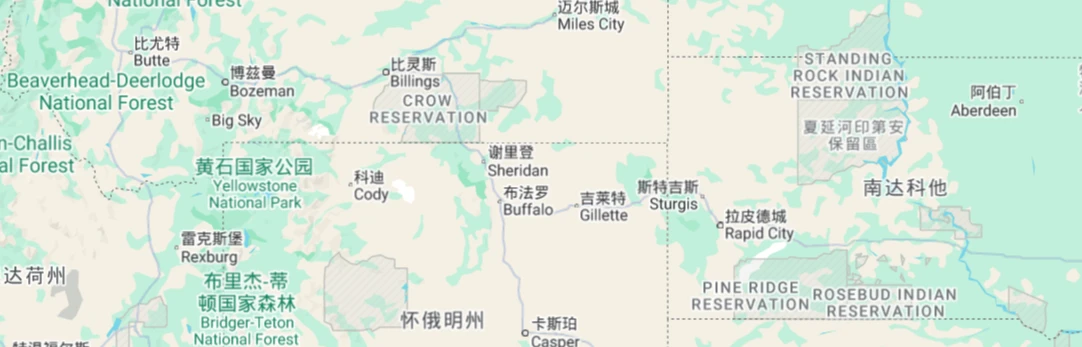
The Powder River Basin across northeast Wyoming is a major onshore development region targeting stacked tight sandstone and shale plays, including the Turner, Niobrara, and Mowry formations. Surface casing strings are typically set between 400 meters and 900 meters true vertical depth (TVD) to protect shallow domestic aquifers and anchor high-pressure drilling equipment. During harsh winter months (November through March), surface ambient temperatures frequently drop to -15°C to -30°C. Mix water stored in exposed rig site tanks often drops to between 3°C and 7°C, while formation temperatures at surface casing shoe depths remain cold, ranging from 14°C to 22°C.
Regional Cementing Challenges with Cold Surface Mix Water
Executing surface casing cementing operations under Wyoming winter conditions introduces distinct technical hurdles:
- Severe Slurry Retardation from Low Mix-Water Temperature: Unheated surface water suppresses initial cement hydration kinetics. Unconditioned slurries take upwards of 28 to 36 hours to attain the regulatory 3.5 MPa compressive strength threshold mandated by the Wyoming Oil and Gas Conservation Commission (WOGCC).
- Operational Inefficiency of Field Water Heating: Utilizing commercial truck-mounted water heating units to warm large volumes of batch water consumes immense fuel, increases logistical costs, and presents carbon emission burdens.
- Freezing Hazards of Liquid Additive Packages: Liquid chemical totes stored on surface locations freeze or experience viscosity spikes, leading to inaccurate liquid metering into batch blenders and erratic downhole thickening times.
Technical Requirements for Powder River Winter Slurry Formulations
To eliminate water heating expenses and overcome cold hydration dormancy, operators establish strict slurry performance criteria:
- Attainment of 3.5 MPa (500 psi) compressive strength within 10 hours at 18°C BHST when mixed with 5°C surface water.
- Thickening time controlled between 2.5 and 4.0 hours to permit safe casing displacement.
- A dry-blended accelerator powder format eliminating liquid chemical freezing issues during transport and storage.
- Zero free fluid separation (0.0% @ 45° angle) and API fluid loss strictly under 50 mL/30 min.
How CG910S Addresses the Challenge
CG910S Low-Temperature Cementing Accelerator Powder is specifically formulated to overcome hydration dormancy caused by cold slurry mix-water temperature. Manufactured as a free-flowing, non-hygroscopic chemical powder, CG910S dry-blends into bulk API Class G cement at central supply facilities. When contacted by 4°C to 8°C unheated mix water at the wellsite, CG910S dissolves immediately, driving C₃S dissolution and triggering rapid C‑S‑H gel precipitation. It eliminates the need for expensive fuel-fired water heating units while securing rapid compressive strength development.
Regional Application Case
In a winter drilling program in Campbell County, Wyoming, a 244.5 mm (9-5/8 inch) surface casing string was cemented inside a 311.1 mm (12-1/4 inch) hole to a total depth of 680 meters TVD. Ambient air temperature at the surface was -18°C, and unheated mix water was drawn from site holding tanks at 5°C. Bottom-hole static temperature was measured at 19°C. The tail slurry was formulated at a density of 1900 kg/m³ (15.8 ppg) utilizing standard Class G Portland cement.
By pneumatically dry-blending CG910S accelerator powder at 2.0% BWOC into the cement blend alongside low-temperature fluid loss additives and defoamers, the cementing team achieved superior laboratory and field operational performance:
- Controlled Slurry Pumpability: Consistometer testing with 5°C pre-chilled mix water demonstrated stable consistency below 30 Bc for 2 hours and 35 minutes, transitioning smoothly to 70 Bc at 3 hours and 15 minutes.
- Compressive Strength Growth (UCA): Ultrasonic Cement Analyzer testing verified initial gelation (50 psi) at 4 hours and 40 minutes, with the mandatory 3.5 MPa (500 psi) threshold reached at 9 hours and 15 minutes at 19°C static temperature.
- Direct Operational Cost Savings: Eliminating surface water heating trucks saved the operator over $14,000 per well in heating rental and fuel costs, while compressing rig WOC downtime by 18 hours.
- Annular Zonal Isolation: Ultrasonic Cement Bond Logs (CBL) confirmed complete acoustic bonding across shallow freshwater sandstone intervals, with zero surface casing vent flow detected.
Laboratory Diagnostic Workflows for Mix-Water Temperature Sensitivity
Accurately evaluating how slurry mix-water temperature influences cement performance requires specialized laboratory testing workflows conforming to API RP 10B-2 testing methodologies:
1. Pre-Chilled Atmospheric and Pressurized Consistometry: Mix water, dry cement blends, and mixing containers must be pre-cooled in refrigerated water baths to exact anticipated field batch temperatures (typically 4°C to 10°C). Testing slurries at standard 23°C room temperature masks the true kinetic retardance of cold water, yielding unreliably short thickening times.
2. Isothermal Heat Conduction Calorimetry: Calorimetry traces the exact heat-evolution profile of the cement slurry mixed at varying water temperatures. Tracking the time to the main C₃S hydration peak demonstrates whether the chemical accelerator successfully restores rapid hydration kinetics under cold batching conditions.
3. Ultrasonic Cement Analysis (UCA) with Thermal Ramp Profiles: UCA autoclaves equipped with cooling jackets measure acoustic velocity starting from chilled surface batch temperatures through bottom-hole heating schedules, accurately tracking compressive strength growth from 50 psi to 500 psi.
Frequently Asked Questions (FAQ)
How does cold mix-water temperature delay Portland cement hydration?
Cold water reduces the kinetic thermal energy of the system, slowing the rate at which alite (C₃S) clinker grains dissolve. This extends the dormant induction period and delays calcium ion supersaturation in the pore water, postponing initial and final setting times.
Can an accelerator powder eliminate the need to heat surface mix water?
Yes. Chemical accelerator powders such as CG910S provide catalytic ions that accelerate alite dissolution even in near-freezing (4°C to 8°C) mix water, enabling rapid setting and early strength development without relying on costly water heating equipment.
Does low mix-water temperature increase the surface viscosity of cement slurry?
Yes. The dynamic viscosity of pure water is higher at near-freezing temperatures than at room temperature. This increases the base plastic viscosity of the slurry during surface mixing, requiring additives that dissolve cleanly without causing secondary gelation.
Is dry-blending CG910S more reliable than adding liquid accelerators in winter?
Dry-blending CG910S powder into bulk cement silos eliminates the hazard of liquid chemical totes freezing on site. It ensures uniform additive distribution across every sack of cement, preventing localized over-acceleration or delayed set pockets.
Key Operational Strategies for Mix-Water Temperature Management
Managing slurry mix-water temperature is critical for achieving predictable thickening times and rapid compressive strength development in cold-weather cementing operations. Relying on unaccelerated slurries or assuming laboratory room-temperature tests reflect chilled field conditions leads to severe waiting-on-cement delays, unexpected slurry gelation, and potential well control hazards.
By implementing a high-performance chemical accelerator powder such as CG910S, cementing engineers neutralize the retardance of cold batch fluids, compress WOC schedules to under 10 hours, and eliminate the logistics costs of field water heating. Dry-blending non-hygroscopic accelerator powders ensures homogeneous slurry kinetics, protects shallow freshwater aquifers, and delivers dependable wellbore barrier integrity across cold-climate drilling campaigns worldwide.
Optimize Your Low-Temperature Mix-Water Slurry Formulations
Consult our technical cementing specialists to evaluate CG910S low-temperature accelerator powder, pre-chilled consistometer testing, and customized slurry designs for your winter and cold-region drilling programs.
Explore CG910S Accelerator SpecificationsBlog Category: Cementing Additives & Chemical Solutions