
The primary additive compatibility factors that prevent slurry flash setting when combining accelerators and fluid loss agents are the selective management of competitive surface adsorption, preservation of the electrical double layer without catastrophic zeta potential collapse, avoidance of polyelectrolyte complex coacervation, and the stoichiometric balancing of calcium ions (Ca²⁺) against polymer hydration envelopes. In offshore and shallow cold-water operations-such as the complex heavy oil field developments across the Bohai Bay Basin in offshore China where circulating temperatures range from 12°C to 30°C-drilling teams must simultaneously achieve aggressive early compressive strength development and tight filtration containment. Incorporating a non-hygroscopic, chemically balanced chemical accelerator powder prevents rapid tricalcium aluminate (C₃A) cross-linking, harmonizes ionic strength with synthetic AMPS polymers, eliminates premature rheological spikes, and ensures pumpable thickening times exceeding 2.5 to 3.5 hours alongside API fluid loss values strictly maintained below 50 mL/30 min.
In oil well cementing, combining chemical accelerators with fluid loss control additives presents a classic physicochemical paradox: accelerators function by rapidly driving ion saturation and breaking passivating clinker layers, whereas polymeric fluid loss additives rely on extended hydrodynamic chains and controlled adsorption to form impermeable filter cakes. If ionic incompatibility occurs during batch mixing, multi-valent catalytic ions collapse the polymer's water-binding structure, triggering sudden slurry flash setting or severe particulate flocculation that leaves casing strings stuck off-bottom. Identifying and controlling critical additive compatibility factors ensures that rapid alite (C₃S) hydration catalysis proceeds smoothly without disrupting dynamic filtration control, providing continuous slurry pumpability and permanent annular barrier integrity.
Explore advanced chemical accelerators and specialized additive formulations engineered for additive compatibility and wellbore integrity:
The Physicochemical Conflict Between Chemical Acceleration and Filtration Control
The primary chemical objective of a cementing accelerator is to catalyze the dissolution of anhydrous cement clinker-predominantly tricalcium silicate (C₃S) and tricalcium aluminate (C₃A)-and force early supersaturation of calcium ions (Ca²⁺) and silicate monomers in the interstitial pore fluid. This rapid ionic surge collapses the dormant induction period and stimulates swift crystallization of fibrous calcium silicate hydrate (C‑S‑H) gel networks and calcium hydroxide (Ca(OH)₂).
Conversely, polymeric fluid loss control agents operate by dissolving into the aqueous pore space, where high-molecular-weight chains extend to physically bind free mix water via hydrogen bonding. A portion of these polymer chains selectively adsorbs onto positively charged hydration surfaces (such as early ettringite needles and aluminate phases), anchoring a flexible, low-permeability micro-gel cake across permeable borehole pore throats. When these two chemically opposing systems are combined without considering additive compatibility factors, multiple destructive interactions can occur:
- Zeta Potential Collapse and Electrostatic Agglomeration: Adding high dosages of uncontrolled inorganic accelerator salts dramatically increases the ionic strength of the mixing water. This compresses the diffuse electrical double layer surrounding cement grains, reducing the negative zeta potential toward the isoelectric point. Lacking electrostatic repulsion, the slurry undergoes rapid flocculation and severe flash setting.
- Polyelectrolyte Complex Coacervation: If cationic or strongly basic accelerator complexes encounter anionic carboxylate or sulfonate groups on fluid loss polymers, instantaneous ionic cross-linking occurs. This produces insoluble polymer-salt precipitates, destroying the polymer's water-holding capability and causing fluid loss to spike above 300 mL.
- Unregulated Tricalcium Aluminate (C₃A) Hydration: Accelerators that trigger premature sulfate depletion cause uninhibited C₃A dissolution. In the absence of available sulfate ions to form ettringite, C₃A reacts directly with water to precipitate hexagonal calcium aluminate hydrates (C₄AH₁₃ and C₂AH₈), resulting in immediate slurry flash setting inside surface lines or casing strings.
- Polymer Dehydration and Salting-Out: Strongly hydrophilic accelerator ions compete with polymer backbones for free water molecules. In severe cases, the accelerator strips the hydration shell from cellulosic or polyacrylamide chains, causing the polymer to coil tightly and precipitate out of solution.
Critical Additive Compatibility Factors for Slurry Stabilization
Preventing slurry flash setting while achieving simultaneous acceleration and filtration control requires balancing four critical physicochemical additive compatibility factors:
- Monomer Chemical Architecture and Ionic Charge Density: Fluid loss additives formulated with 2-acrylamido-2-methylpropane sulfonic acid (AMPS) and non-ionic monomers (such as N,N-dimethylacrylamide) feature strongly acidic sulfonate groups (-SO₃H) with low pKa values. These groups remain fully ionized across high ionic strengths, resisting multivalent calcium cross-linking and avoiding polymer coacervation when accelerators are introduced.
- Controlled Dissolution Enthalpy and Anion Mobility: Utilizing non-chloride organic and inorganic catalytic salts (such as calcium formate and nitrate complexes) provides controlled ionic release. These anions accelerate C₃S dissolution by permeabilizing the passivating silicate envelope without inducing violent C₃A flash hydration.
- Order of Addition and Dry-Blending Homogenization: Introducing liquid accelerators directly into unconditioned mix water can shock dissolved polymers. Utilizing a dry-blended accelerator powder integrated homogeneously throughout the dry cement clinker ensures that both the accelerator and fluid loss agent hydrate uniformly upon contacting water, avoiding localized chemical concentration spikes.
- Steric Dispersion Buffering: Incorporating compatible sulfonated dispersants (such as PNS) maintains steric and electrostatic repulsion between hydrating particulates, preventing inter-particle collision and premature gel structure development while the chemical accelerator promotes internal silicate dissolution.
| Slurry Property (18°C Circulating Temp) | Incompatible System (High CaCl₂ + CMC) | Compatible Formulation (CG910S + AMPS) |
|---|---|---|
| Rheological Behavior upon Mixing | Flash gelation / Viscosity spike (> 100 Bc) | Smooth, pumpable fluid (< 25 Bc) |
| Thickening Time Stability (to 70 Bc) | Premature flash set (< 45 minutes) | 3.0 – 4.0 Hours (Controlled transition) |
| API Fluid Loss (mL/30 min @ 30°C) | > 250 mL (Polymer salting-out failure) | ≤ 35 – 45 mL (Tight filter cake) |
| Time to 3.5 MPa (500 psi Compressive Set) | Erratic / Friable matrix | 8.0 – 10.5 Hours (Rapid WOC) |
| Free Fluid Separation (API 45° Test) | 3.5% – 6.0% (Severe water channeling) | 0.0% (Zero Free Water) |
Synergistic Polymer Engineering and Chemical Compatibility
In critical well cementing operations, chemical compatibility between filtration additives and other slurry components is essential to prevent premature gelation and fluid loss failure. When designing slurry systems for narrow-margin formations, engineers must evaluate how each chemical component interacts across dynamic temperature and shear gradients.
Pairing an engineered accelerator powder with thermally stable AMPS-based polymers provides robust operational safety margins. The steric repulsion imparted by synthetic polymer side chains prevents uncoordinated catalytic ions from triggering premature slurry thickening. Laboratory testing conducted under specifications established by the American Petroleum Institute (API) under API RP 10B-2 confirms that chemically compatible formulations maintain low plastic viscosities while delivering rapid compressive strength development.
Case Application: Bohai Bay Basin, Offshore Eastern China
Regional Cementing Background in the Bohai Bay Basin
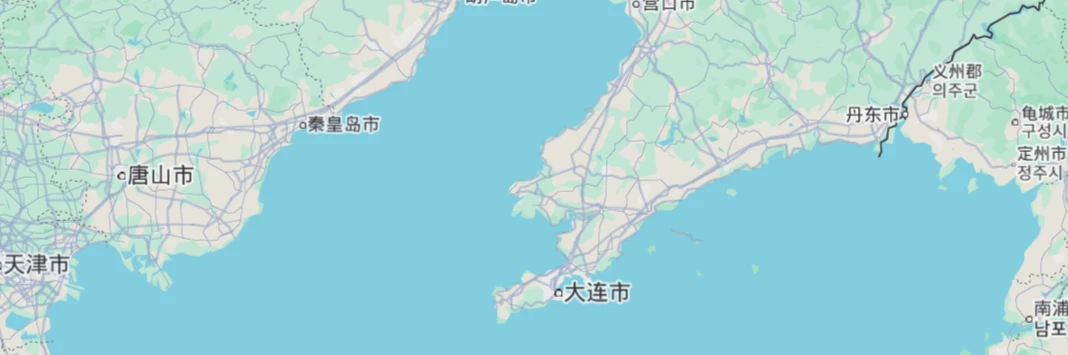
The Bohai Bay Basin offshore eastern China represents a major shallow-water offshore producing province characterized by complex fault-block heavy oil reservoirs. Multi-well platform development requires drilling and cementing 339.7 mm (13-3/8 inch) and 244.5 mm (9-5/8 inch) surface casing strings into shallow, unconsolidated Minghuazhen and Guantao formations at depths between 450 meters and 1,100 meters TVD. In these shallow marine strata, sea-bottom water temperatures drop to 6°C to 12°C during winter months, resulting in low bottom-hole circulating temperatures (16°C to 26°C). Cement slurries must be designed with both high-performance fluid loss control to protect loose sandstone formations and rapid early acceleration to support offshore platform schedules.
Regional Cementing Challenges in Offshore Shallow Sands
Executing surface casing cementing in Bohai Bay platforms introduces acute chemical and operational risks:
- Severe Flash Setting Risk in Dual-Additive Slurries: Attempting to accelerate cold surface slurries by adding high concentrations of conventional calcium chloride alongside standard fluid loss agents frequently provokes sudden slurry flash setting in rig batch tanks or surface lines.
- Highly Permeable Unconsolidated Reservoir Sands: The Minghuazhen sandstones exhibit permeabilities up to 1,500 mD. If chemical incompatibility degrades the fluid loss polymer, rapid slurry desiccation causes annular bridging and incomplete cement returns to the seabed.
- High Offshore Platform Spread Rates: Platform slot availability demands rapid casing shoe drill-out. Unaccelerated cement takes over 30 hours at 20°C to achieve 3.5 MPa, generating costly rig standby delays across intensive batch-drilling campaigns.
Technical Requirements for Bohai Shallow Surface Formulations
To overcome severe offshore operational constraints, cementing service providers establish strict slurry design criteria:
- Complete chemical compatibility between accelerators and fluid loss polymers, eliminating flash setting risks.
- Thickening time stably maintained between 2.5 and 3.5 hours at 22°C BHCT, with a sharp right-angle transition.
- API fluid loss strictly controlled below 45 mL/30 min across unconsolidated sand intervals.
- Attainment of 3.5 MPa (500 psi) compressive strength within 9 to 11 hours at 20°C static temperature.
How CG910S Addresses the Challenge
CG910S Low-Temperature Cementing Accelerator Powder is engineered specifically to eliminate chemical antagonism and prevent slurry flash setting when combined with fluid loss control agents. Manufactured as a high-purity, free-flowing dry chemical powder, CG910S utilizes non-chloride catalytic salts that promote rapid alite (C₃S) dissolution without collapsing the electrical double layer or desorbing synthetic AMPS polymers. It dry-blends smoothly into API Class G bulk cement, ensuring uniform hydration kinetics, stable pumpability, and rapid compressive strength development in cold offshore formations.
Regional Application Case
In an offshore development campaign in the Bohai Bay Basin, a 244.5 mm (9-5/8 inch) surface casing string was cemented inside a 311.1 mm (12-1/4 inch) borehole to a total depth of 820 meters TVD from a fixed drilling platform. Bottom-hole circulating temperature was measured at 20°C, with static temperature at 24°C and seawater mix water at 10°C. The slurry was designed at a density of 1900 kg/m³ (15.8 ppg) utilizing API Class G Portland cement.
By pneumatically dry-blending CG910S accelerator powder at 2.0% BWOC alongside a compatible AMPS-based fluid loss additive at 1.8% BWOC and tailored defoamers, the cementing team achieved superior laboratory and operational performance:
- Zero Flash Setting: Slurry mixing aboard the offshore platform proceeded smoothly with zero viscosity spikes or false setting, maintaining a pumpable consistency below 25 Bc for 2 hours and 40 minutes.
- Filtration Containment: API fluid loss was restricted to 36 mL/30 min under 6.89 MPa differential pressure, preventing slurry desiccation across the permeable Minghuazhen sands.
- Compressive Strength Growth (UCA): Ultrasonic Cement Analyzer testing verified initial gel strength (50 psi) at 4 hours and 30 minutes, with the mandatory 3.5 MPa (500 psi) threshold achieved at 9 hours and 15 minutes at 24°C static temperature.
- Field Execution: The casing was displaced to depth with 100% full returns to the mudline. Casing shoe drill-out was completed 11 hours post-plug bump, saving 17 hours of platform rig time compared to offset wells.
Laboratory Diagnostic Protocols for Additive Compatibility Verification
Verifying chemical compatibility when combining accelerators and fluid loss agents requires structured laboratory testing workflows conforming to API RP 10B-2 standards:
1. Atmospheric and Pressurized Consistency Sweeps: Slurries must be monitored continuously in consistometers from surface mixing through bottom-hole conditions. Immediate consistency jumps exceeding 40 Bc during the first 15 minutes indicate chemical flash setting or severe polyelectrolyte flocculation.
2. Coupled HPHT Filtration Testing: Pressurized fluid loss tests must be performed on accelerated slurries conditioned at bottom-hole circulating temperatures. A sudden rise in filtration volume indicates that the chemical accelerator is desorbing or collapsing the fluid loss polymer.
3. Zeta Potential and Rheological Characterization: Measuring electrophoretic mobility and Bingham plastic rheological parameters across varying additive ratios identifies optimal dosing thresholds, confirming that electrostatic dispersion is maintained alongside catalytic hydration.
Frequently Asked Questions (FAQ)
What causes slurry flash setting when accelerators and fluid loss agents are co-mixed?
Flash setting occurs when uncontrolled accelerator ions trigger rapid tricalcium aluminate (C₃A) hydration or compress the electrical double layer of cement particles, inducing catastrophic zeta potential collapse and sudden slurry solidification.
How does AMPS polymer chemistry prevent incompatibility with accelerators?
AMPS polymers contain strongly acidic sulfonic acid groups (-SO₃H) that maintain complete ionization and steric hydration shells even in high ionic strength solutions. They resist multivalent calcium ion cross-linking, preventing polymer precipitation and flash gelation.
Can dry-blending an accelerator powder eliminate batch-mixing flash setting?
Yes. Pneumatically dry-blending accelerator powders such as CG910S into bulk cement ensures uniform particle distribution. This prevents the high localized chemical concentrations that commonly trigger flash setting when liquid accelerators are added into batch tanks.
What API fluid loss threshold should be maintained in accelerated surface slurries?
For accelerated surface casing slurries penetrating permeable sandstone or gravel beds, API fluid loss should be strictly controlled below 50 mL/30 min to prevent slurry desiccation and annular flash bridging during placement.
Key Chemical Considerations for Additive Compatibility and Slurry Integrity
Achieving reliable zonal isolation in cold surface casing operations requires harmonizing chemical acceleration with filtration control. Overlooking additive compatibility factors when designing dual-purpose slurries risks catastrophic downhole flash setting, premature slurry dehydration, and costly non-productive rig downtime.
By implementing a high-performance chemical accelerator powder such as CG910S alongside compatible AMPS-based fluid loss polymers, cementing engineers maintain stable slurry pumpability for over 3 hours, restrict API filtration below 45 mL/30 min, and achieve 3.5 MPa compressive strength development within 9 to 11 hours. Standardizing additive compatibility evaluations delivers predictable slurry rheology, protects permeable formations, and ensures durable wellbore barrier integrity across demanding offshore and onshore drilling operations worldwide.
Optimize Your Accelerator and Fluid Loss Additive Compatibility
Consult our technical cementing specialists to evaluate CG910S low-temperature accelerator powder, additive compatibility testing, and customized slurry rheology designs for your critical well projects.
Explore CG910S Accelerator SpecificationsBlog Category: Cementing Additives & Chemical Solutions