
A chloride-free cement accelerator is essential for surface casing and groundwater aquifer protection because it eliminates the severe risks of steel casing stress corrosion cracking (SCC), prevents toxic chloride ion leaching into shallow freshwater tables, and complies with stringent environmental regulations without delaying low-temperature cement hydration kinetics. In environmentally sensitive agricultural and energy-producing regions-such as the Surat Basin in Queensland, Australia, where coal seam gas (CSG) and conventional wells traverse vital Great Artesian Basin aquifers-traditional calcium chloride (CaCl₂) accelerators introduce corrosive halide ions that penetrate the protective passive film of carbon steel casing strings and contaminate potable water supplies. Utilizing an advanced, non-corrosive chloride-free cement accelerator provides rapid tricalcium silicate (C₃S) hydration catalysis, accelerates early compressive strength development to exceed 3.5 MPa (500 psi) within 8 to 12 hours at cold bottom-hole temperatures (15°C to 35°C), and establishes a permanent, environmentally benign annular barrier.
Surface casing operations represent the primary environmental barrier between downhole hydrocarbon production and vulnerable near-surface drinking water resources. When cementing through shallow, permeable aquifer zones, drilling operators must ensure the cement slurry develops structural load-bearing capacity rapidly to avoid prolonged waiting-on-cement (WOC) intervals. However, reliance on conventional chloride-bearing salts introduces long-term annular hazards: soluble chlorides diffuse into porous rock, degrade agricultural irrigation reservoirs, and accelerate galvanic corrosion along the outer casing wall under cyclic thermal and mechanical stresses. Implementing an engineered chloride-free cement accelerator eliminates these environmental liabilities while ensuring reliable slurry pumpability, robust bonding, and complete zonal containment.
Explore advanced chemical accelerators and specialized additive formulations engineered for low-temperature wellbore barriers:
Downhole Corrosion and Hydrogeological Threats of Chloride-Based Accelerators
For decades, calcium chloride (CaCl₂) served as the primary chemical accelerator in oilfield cementing due to its low cost and rapid hydration response. However, extensive downhole metallurgical failures and stringent environmental assessments have revealed profound structural and hydrogeological risks associated with chloride-bearing slurry designs. In surface casing cementing across shallow horizons, the presence of free chloride ions initiates a destructive chain of chemical reactions:
Under normal conditions, Portland cement generates a highly alkaline pore fluid (pH 12.5 to 13.8) dominated by saturated calcium hydroxide (Ca(OH)₂). This alkaline state spontaneously passivates carbon steel casing by forming a microscopic gamma-ferric oxide (γ‑Fe₂O₃) protective film across the metal surface. When chloride ions exceed critical threshold limits (often as low as 0.2% to 0.4% by weight of cement), these aggressive halide anions penetrate and destabilize the passive oxide film. In the presence of residual oxygen or dissolved moisture, pitting corrosion initiates rapidly, concentrating localized mechanical stress and triggering catastrophic chloride-induced stress corrosion cracking (SCC).
Simultaneously, surface casings isolate potable aquifers relied upon for municipal consumption and agricultural irrigation. Incorporating high concentrations of CaCl₂ (typically 2.0% to 4.0% BWOC) introduces highly mobile chloride salts into the annular space. If the cement sheath develops micro-annuli or if excessive fluid loss occurs during slurry placement, soluble chlorides leach directly into groundwater tables, causing permanent aquifer salinization that violates regional environmental protection mandates.
Chemical Mechanisms of Non-Corrosive Acceleration Chemistry
Replacing hazardous halides with an advanced chloride-free cement accelerator requires sophisticated inorganic and organic salt chemistry that catalyzes alite (C₃S) and tricalcium aluminate (C₃A) hydration without introducing aggressive ions. Modern non-chloride systems utilize synergistic blends of calcium nitrate, calcium formate, sodium thiocyanate, and alkanolamines to drive hydration kinetics through distinct physicochemical pathways:
- Catalytic Membrane Permeation without Halide Attack: Formate and nitrate anions exhibit high ionic mobility, penetrating the initial metastable silicate layer that passivates C₃S clinker grains. These anions accelerate the dissolution of silicate tetrahedra and release calcium ions (Ca²⁺) into the interstitial pore fluid without depassivating steel casing surfaces.
- Preservation of Alkaline Passivation: An engineered chloride-free cement accelerator maintains a high pore-solution pH throughout early hydration, sustaining the protective γ‑Fe₂O₃ boundary layer across the outer casing wall and providing active cathodic inhibition against pitting corrosion.
- Accelerated C‑S‑H and Ettringite Crystallization: Non-chloride catalytic salts accelerate early calcium ion supersaturation, driving rapid nucleation of dense fibrous calcium silicate hydrate (C‑S‑H) gel and prismatic ettringite needles. This rapid crystallization dense-packs the capillary void network, substantially reducing set cement matrix permeability.
- Environmental Compatibility with Potable Aquifers: Formulated from non-toxic, biodegradable, or environmentally benign salts, a chloride-free cement accelerator eliminates the hazard of chemical leaching, ensuring complete compliance with baseline groundwater quality monitoring standards.
| Performance & Environmental Metric | Traditional Calcium Chloride (CaCl₂) | Chloride-Free Accelerator (CG910S) |
|---|---|---|
| Casing Corrosion Potential | Severe (Pitting & Stress Corrosion Cracking) | Non-Corrosive / Passivating |
| Groundwater Aquifer Leaching Hazard | High chloride contamination risk | Zero Halide Leaching (Eco-Safe) |
| Time to 3.5 MPa (500 psi @ 20°C BHST) | 7.0 – 9.0 Hours | 8.0 – 10.5 Hours (Rapid WOC) |
| 24-Hour Compressive Strength | 14.0 – 17.5 MPa | 15.0 – 18.5 MPa |
| Compatibility with Fluid Loss Polymers | Prone to polymer salting-out & flocculation | Full chemical synergy & low filtration |
Synergistic Polymer Compatibility and Aquifer Filtration Control
Protecting sensitive groundwater formations requires an integrated approach that couples rapid hydration acceleration with tight dynamic filtration control. Shallow surface sands often exhibit high Darcy permeabilities exceeding 800 mD. If an accelerated cement slurry suffers excessive fluid loss, interstitial pore fluid escapes into the aquifer, causing localized slurry desiccation, flash bridging, and severe annular shrinkage.
Deploying an engineered chloride-free cement accelerator eliminates polymer incompatibility problems. While high concentrations of CaCl₂ cause anionic synthetic polymers to coil, precipitate, or "salt out," non-chloride catalytic salts preserve the extended hydrodynamic volume of fluid loss additives. Testing conducted in accordance with standards established by the American Petroleum Institute (API) under API RP 10B-2 confirms that slurries formulated with non-chloride systems maintain API filtration strictly below 50 mL/30 min while delivering aggressive early compressive strength gain.
Case Application: Surat Basin, Queensland, Australia

Regional Cementing Background in the Surat Basin
The Surat Basin in southern Queensland is a major hub for coal seam gas (CSG) development and conventional energy production. Drilling programs penetrate shallow sedimentary sequences between 200 and 800 meters TVD, intersecting the Springbok Sandstone, Hutton Sandstone, and Precipice Sandstone-which constitute vital freshwater aquifers of the Great Artesian Basin (GAB). Bottom-hole static temperatures in these surface sections range from 18°C to 28°C. Because these aquifers sustain regional agriculture and pastoral industries, the Queensland Department of Resources and environmental regulatory authorities enforce strict non-contamination and well-integrity standards.
Regional Cementing Challenges in GAB Aquifer Horizons
Operators executing surface casing programs in the Surat Basin encounter demanding environmental and operational constraints:
- Zero-Chloride Environmental Mandates: Environmental protection guidelines strictly prohibit the use of high-concentration chloride-based additives across freshwater intervals to prevent irreversible salinity contamination of the Great Artesian Basin.
- Severe Waiting-on-Cement Costs in Multi-Well Campaigns: Factory-style CSG drilling campaigns require rapid casing shoe drill-out to maintain rig mobilization schedules. Unaccelerated cement takes over 24 hours at 22°C to achieve 3.5 MPa, generating substantial cumulative non-productive time across hundreds of wells.
- Long-Term Casing Corrosion Prevention: Surface casing strings must maintain structural integrity for over 30 years without suffering external pitting corrosion or stress cracking that could compromise aquifer zonal isolation.
Technical Requirements for Aquifer Protection Slurry Systems
To satisfy regulatory and operational criteria in the Surat Basin, cementing formulations must satisfy precise specifications:
- 100% chloride-free chemical formulation with total halide ion content below baseline regulatory limits.
- Attainment of 3.5 MPa (500 psi) compressive strength within 10 hours at 22°C static temperature.
- Controlled pumpability with thickening times between 2.5 and 4.0 hours to permit safe surface mixing and displacement.
- Zero free fluid separation (0.0% @ 45° angle) and API fluid loss strictly under 50 mL/30 min.
How CG910S Addresses the Challenge
CG910S Low-Temperature Cementing Accelerator Powder acts as a high-performance chloride-free cement accelerator engineered specifically for environmentally sensitive surface casing applications. Synthesized from ultra-pure catalytic salts, CG910S provides rapid alite (C₃S) hydration catalysis without introducing corrosive chloride ions. It dry-blends smoothly into API Class A or Class G bulk cement, dissolves rapidly during water batching, and accelerates early compressive strength development while maintaining passive corrosion protection across carbon steel casing.
Regional Application Case
In a multi-well surface casing campaign in the Surat Basin, a 244.5 mm (9-5/8 inch) casing string was cemented inside a 311.1 mm (12-1/4 inch) borehole to a total depth of 460 meters TVD, penetrating through the Hutton Sandstone aquifer. Static formation temperature was 21°C, with mix water maintained at 18°C. The slurry was designed at a density of 1870 kg/m³ (15.6 ppg) utilizing standard Class A Portland cement.
By pneumatically blending CG910S chloride-free cement accelerator at 1.8% BWOC into the dry cement alongside low-temperature fluid loss additives and defoamers, the cementing team achieved superior laboratory and field operational performance:
- Thickening Time Stability: Consistometer testing verified a pumpable consistency below 30 Bc for 2 hours and 35 minutes, transitioning smoothly to 70 Bc at 3 hours and 15 minutes.
- Compressive Strength Growth (UCA): The slurry achieved initial gelation (50 psi) in 4 hours and 45 minutes, reaching the mandatory 3.5 MPa (500 psi) threshold at 9 hours and 10 minutes at 21°C static temperature.
- Environmental and Corrosion Compliance: Water leach testing on cured cement cores confirmed zero detectable chloride migration, satisfying all Great Artesian Basin groundwater protection mandates. Linear polarization corrosion testing confirmed zero depassivation of the steel casing surface.
- Field Execution: Full cement returns were circulated to surface with zero slurry dehydration or fluid cross-flow. Subsequent acoustic logging (CBL) confirmed complete 360-degree bonding across all freshwater horizons, allowing safe shoe drill-out in under 11 hours.
Laboratory Diagnostic Protocols for Chloride-Free Accelerator Verification
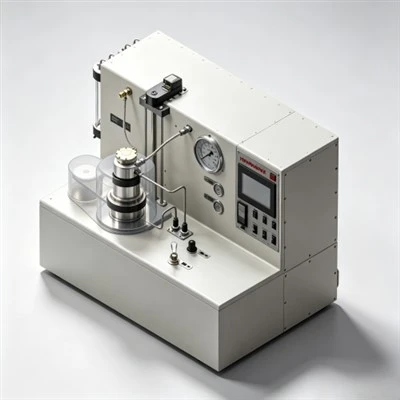
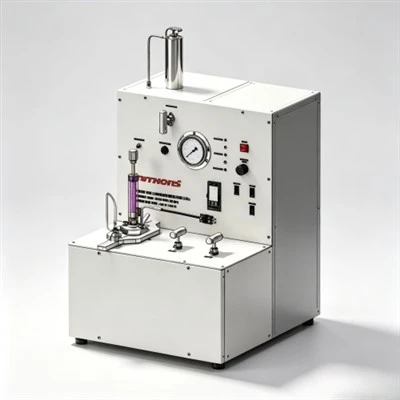
Qualifying a chloride-free cement accelerator for critical aquifer protection campaigns requires specialized testing workflows conforming to API RP 10B-2 standards and environmental testing protocols:
1. Ion Chromatography and Halide Leaching Analysis: Hardened cement specimens cured in deionized water must undergo ion chromatography testing to verify that soluble chloride, bromide, and fluoride ions remain below strict environmental detection limits.
2. Electrochemical Corrosion and Passivation Logging: Autoclave corrosion cells equipped with steel casing coupons measure open-circuit potential and polarization resistance in slurry filtrates. Confirming that the corrosion current density remains negligible verifies long-term casing passivation.
3. Ultrasonic Compressive Strength Tracking (UCA): Continuous acoustic velocity logging tracks the rate of strength progression at low temperatures (15°C to 30°C). Pinpointing the exact elapsed time from 0.35 MPa (50 psi) to 3.5 MPa (500 psi) confirms rapid setting kinetics without requiring halogen salts.
Frequently Asked Questions (FAQ)
Why is calcium chloride (CaCl₂) hazardous to casing integrity?
Free chloride ions penetrate and destroy the passive gamma-ferric oxide film on carbon steel casing. This initiates localized pitting corrosion and stress corrosion cracking (SCC), severely compromising casing pressure resistance over the well lifecycle.
How does a chloride-free cement accelerator match the speed of CaCl₂?
Engineered chloride-free accelerators utilize synergistic organic and inorganic catalytic salts (such as calcium formate and nitrate complexes). These compounds accelerate the dissolution of alite (C₃S) clinker grains and promote rapid C‑S‑H gel precipitation without requiring corrosive halide ions.
Can a chloride-free accelerator be co-mixed with fluid loss additives?
Yes. Unlike high concentrations of CaCl₂, which often cause polymers to coil or salt out, a chloride-free cement accelerator maintains full chemical compatibility with synthetic fluid loss polymers, keeping API filtration below 50 mL/30 min.
Is CG910S suitable for pneumatic bulk plant dry blending?
Yes. CG910S is manufactured as a free-flowing, non-hygroscopic powder that dry-blends homogeneously into bulk Portland cement silos without caking, ensuring uniform chemical distribution across the entire pumped slurry volume.
Key Environmental and Operational Considerations for Aquifer Cementing
Protecting precious groundwater aquifers while maintaining cost-effective drilling schedules requires eliminating hazardous additives from surface casing designs. Continuing to rely on conventional chloride-bearing accelerators exposes operators to severe regulatory penalties, groundwater contamination claims, and catastrophic casing failures caused by stress corrosion cracking.
By implementing an advanced chloride-free cement accelerator such as CG910S, cementing engineers achieve early compressive strength development exceeding 3.5 MPa within 9 to 11 hours while maintaining passive corrosion protection along steel casings. Dry-blending non-corrosive accelerator powders delivers environmental safety, eliminates waiting-on-cement delays, and guarantees permanent annular zonal isolation across critical aquifer horizons worldwide.
Protect Groundwater Aquifers with High-Performance Accelerators
Consult our technical cementing specialists to evaluate CG910S chloride-free accelerator powder, environmental leaching protocols, and non-corrosive slurry designs for your shallow casing operations.
Explore CG910S Accelerator SpecificationsBlog Category: Cementing Additives & Chemical Solutions