

In oil and gas well construction, standard engineering practices mandate that wellbores undergo precise structural stabilization to withstand severe downhole environments. A well-executed types of cementing program forms the primary foundation for long-term well integrity, structural casing support, and permanent zonal isolation. During drilling and completion, operators utilize distinct types of cementing methodologies depending on geological stratigraphy, downhole temperature profiles, formation pore pressure gradients, and specific well lifetime objectives.
Whether deploying primary slurry sheaths to secure deep production strings or performing high-pressure squeeze repairs, selecting appropriate chemical formulations and verifying slurry rheology remain critical to operational success. High-performance chemical additives-including fluid loss agents, retarders, and dispersants-and precise laboratory qualification using HTHP consistometers and rotational viscometers ensure that every cement job achieves an impermeable, leak-free hydraulic seal.
1. Primary Cementing: The Foundation of Well Integrity
Primary cementing represents the first and most vital operation performed immediately after a casing string is run to target depth. The core objective is to pump a precisely designed cement slurry down through the casing interior, out through the casing shoe, and up into the annular space between the outer casing wall and the formation borehole. As the slurry hydrates and hardens, it forms an impermeable rock-like sheath around the pipe.
Executing a successful primary cement job achieves four mandatory structural and environmental objectives:
- Complete Zonal Isolation: Sealing off porous hydrocarbon formations from water-bearing aquifers, preventing inter-zonal fluid cross-flow and surface gas migration.
- Structural Casing Support: Anchoring the heavy steel casing string to the surrounding rock matrix to withstand axial, burst, and collapse stresses.
- Corrosion Protection: Encapsulating the steel pipe in an alkaline environment to prevent corrosive formation fluids (H2S, CO2, saline brine) from degrading the casing wall.
- Borehole Wall Stabilization: Supporting weak, friable, or sloughing shale formations to preserve long-term borehole geometric stability.

To prevent mud contamination during primary placement, chemical spacers and pre-flushes are pumped ahead of the slurry to scour filter cake from the formation face. During displacement, high-performance fluid loss additives prevent excessive water loss into permeable formations, maintaining proper slurry density and preventing localized bridging.
📖 Deep Dive Technical Reading: To understand the exact physical displacement steps and surface pumping mechanics required for primary cementing execution, read our complete operational analysis on engineering steps in primary well cementing execution.
2. Remedial Cementing: Corrective Repair and Maintenance
When primary cementing fails to achieve complete zonal isolation-due to mud channeling, gas migration, slurry dehydration, or mechanical micro-annuli-remedial cementing (often termed repair cementing) is required. Remedial operations correct subsurface defects, restore hydraulic isolation, and ensure environmental compliance.
Remedial operations are broadly categorized into two main applications:
- Squeeze Cementing: The process of forcing a custom slurry under controlled hydraulic pressure through casing perforations or micro-fractures directly into leaking channels or depleted formations. This seals micro-annuli, repairs compromised casing seats, and blocks unwanted formation water ingress.
- Plug Cementing: Placing a high-strength cement column across a specific depth interval in the wellbore. This technique is utilized for zonal isolation prior to hydraulic fracturing, temporary well shut-in, or permanent well abandonment.
3. Stage Cementing: Managing Extreme Depths and Weak Formations
In deep wellbores or geological columns containing weak formations with low fracture gradients, pumping a continuous full-length cement column in a single stage exerts excessive hydrostatic pressure. This can cause formation breakdown, resulting in massive fluid loss into weak zones. In such scenarios, engineers deploy stage cementing techniques.
Stage cementing utilizes specialized downhole mechanical tools, known as stage collars or multi-stage cementing valves (DV tools), integrated into the casing string. The job is split into two or more sequential pumping operations:
- The first stage slurry is pumped through the casing shoe at the bottom of the wellbore, securing the lower zone.
- A drop-plug activates the mechanical stage collar located above the weak formation.
- Side ports open, allowing the second-stage cement slurry to exit into the upper annulus without placing high hydrostatic head on the lower delicate zones.

4. Plug Cementing (Plug-Back Operations)
Plug cementing involves placing a balanced solid cement plug within a specific section of open or cased wellbore. Unlike primary cementing which fills an annular gap, plug cementing forms a solid internal barrier across the well path.
Common field applications for plug cementing include:
- Directional Kick-Off / Side-Tracking: Creating a hard mechanical foundation downhole to deflect a drill bit for directional or horizontal drilling.
- Lost Circulation Control: Sealing off high-permeability caverns or vuggy fractures that consume drilling fluids.
- Depleted Zone Isolation: Sealing lower depleted zones before perforating upper prospective intervals.
- Plug and Abandonment (P&A): Permanently sealing the wellbore at end-of-life to protect shallow freshwater aquifers and surface ecosystems.
📖 Technical Guide: Formulations used in plug-back operations require predictable thickening profiles under changing bottom-hole static temperatures. Explore our technical article on chemical mechanisms of high-temperature cementing retarders to see how setting kinetics are controlled.
5. Reverse Circulation Cementing
In conventional cementing, slurry is pumped down the casing and returns up through the annulus. In reverse circulation cementing, the fluid path is inverted: the cement slurry is pumped directly down the annular space while drilling fluid returns up through the casing inner diameter.
This method provides major engineering advantages under specific reservoir conditions:
- Reduced Equivalent Circulating Density (ECD): Minimizes bottom-hole hydraulic pressures, making it suitable for low-pressure or highly fractured formations.
- Faster Cement Placement: Drastically reduces slurry travel time, minimizing thermal exposure and thickening risks.
- Lower Pumping Horsepower Requirements: Decreases surface pressure requirements when cementing long casing strings.

6. Foamed Cementing: Ultra-Lightweight Engineering
Foamed cementing utilizes a specialized slurry system created by injecting high-pressure nitrogen gas (or liquid foaming agents) into a base cement slurry at surface mixing units. The resulting microscopic gas bubble dispersion forms a low-density, highly expandable cement matrix upon setting.
Foamed cement systems are chosen for:
- Ultra-Low Density Requirements: Slurry densities can be reduced as low as 8.5 to 11.5 ppg, avoiding loss of circulation in severely depleted reservoirs.
- Gas Migration Control: High expansion characteristics maintain positive circumferential radial stress against casing and formation, locking out gas migration during static gelation.
- Enhanced Mechanical Elasticity: Lower Young's modulus provides flexural resilience, preventing sheath shattering during subsequent hydraulic fracturing or thermal steam injection.
7. Liner Cementing Techniques
Liner cementing is executed when a partial casing string (a liner) is lowered into the hole and suspended from the lower section of an existing upper casing string using a mechanical liner hanger, rather than extending all the way back to the surface.
Liner placement requires precise chemical control and mechanical hardware because annular clearances are narrow and displacement volumes are small. Utilizing specialized dispersants and synthetic fluid loss polymers maintains low plastic viscosity and prevents slurry gelling within tight annular gaps.

Comparative Matrix: Key Characteristics of Cementing Methods
The table below provides a comprehensive engineering comparison across various types of cementing operations, highlighting primary application triggers, operational goals, and essential chemical additives.
| Cementing Method | Primary Operational Trigger | Key Engineering Goal | Critical Chemical Additives |
|---|---|---|---|
| Primary Cementing | New casing string installed after drilling section | Complete zonal isolation & casing support | Fluid Loss Agents, Retarders, Dispersants |
| Squeeze Cementing | Casing leaks, micro-annuli, or fluid entry | Forced slurry penetration into channels/leaks | High-filtration Fluid Loss, Accelerators |
| Stage Cementing | Deep wells with weak formation zones | Reduces hydrostatic head during displacement | Lightweight Extenders, Retarders |
| Plug-Back Cementing | Well abandonment or side-tracking kick-off | Forms solid interior hydraulic plug downhole | Thixotropic Agents, Silica Flour (HPHT) |
| Foamed Cementing | Depleted formation with low fracture gradient | Ultra-low density & gas migration resistance | Surfactant Foaming Agents, Stabilizers |
| Liner Cementing | Installing short intermediate/production string | Tight annular displacement & lap sealing | High-Efficiency Dispersants, Retarders |
Essential Chemical Systems & Laboratory Testing Equipment
Regardless of which types of cementing operations are conducted, achieving long-term hydraulic seal integrity requires combining engineered chemical additives with precise laboratory evaluation. Neat cement and water mixtures cannot withstand downhole temperature variations, high pressures, dynamic fluid shearing, or corrosive formation gases.
Critical Chemical Additive Classifications
To ensure slurry pumpability and long-term durability across all types of cementing, engineers utilize specialized chemical systems:
- Fluid Loss Additives: Essential for preventing water filtration loss into permeable formations. High-performance synthetic fluid loss control agents maintain slurry water-cement ratios, prevent premature flash gelation, and seal off gas migration paths.
- Cementing Retarders: High-temperature polymer retarders extend thickening time under elevated bottom-hole circulating temperatures (BHCT). Synthetic high-temperature retarders ensure safe placement window during long deep displacement jobs without degradation.
- Dispersants & Friction Reducers: Lower slurry plastic viscosity, allowing high solids loading while reducing surface pumping pressures to facilitate efficient displacement in turbulent flow.
Standardized Laboratory Testing Instruments
Before any slurry is mixed at the rig site, laboratory technicians must verify its performance parameters according to API Spec 10A standards using specialized testing equipment:
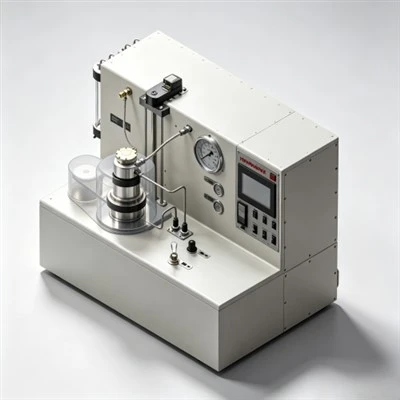
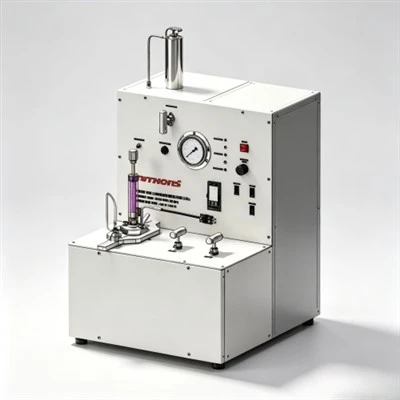
- HTHP Consistometers: Measure slurry thickening time under simulated bottom-hole static and circulating pressure/temperature conditions. An HTHP consistometer records consistency in Bearden Units (Bc) to confirm a stable pumpability window before rapidly transitioning to hard set.
- Rotational Viscometers: Determine plastic viscosity (PV), yield point (YP), and gel strengths across multiple rotational speeds. Technicians rely on a calibrated rotational viscometer to model fluid hydraulics and prevent displacement channeling downhole.
Regional Case Study: Permian Basin HPHT Production Liner Cementing
In the Permian Basin (Delaware Sub-basin, USA), horizontal drilling targeting deep Wolfcamp shale formations involves high bottom-hole static temperatures exceeding 310°F (154°C) at depths beyond 16,500 feet. Operators face narrow pressure windows between formation pore pressure and fracture gradients, alongside high risks of gas channeling from upper shale sequences.

During a recent 18,200-foot liner cementing operation, conventional slurries exhibited premature viscosity buildup and gas invasion. The engineering team redesigned the slurry by incorporating specialized high-temperature polymer retarders, anti-gas channeling fluid loss agents, and effective dispersants. Pre-job testing on HTHP consistometers verified a 6.5-hour flat thickening window under 315°F BHCT, with API fluid loss controlled under 30 mL/30 min.
The optimized liner cement job achieved 100% displacement efficiency without formation breakdown. Subsequent radial cement bond acoustic logging confirmed complete zonal isolation across the horizontal pay zone, proving that matching specialized additives with exact testing protocols guarantees success across challenging types of cementing operations.
📖 Related Industry Insights: To review comprehensive additive chemistry and fluid stabilization options across various well designs, check out our guide on essential oil well cementing additives and chemical formulations.
Optimizing Well Integrity Through Tailored Cementing Solutions
Each of the distinct types of cementing plays an essential role in preserving wellbore architecture, securing casing strings, and protecting surrounding geological environments. Selecting the appropriate technique-whether primary, stage, squeeze, or lightweight foamed cementing-requires thorough evaluation of formation pressures, well depth, and thermal stresses. By combining high-performance chemical additives with exact laboratory testing using consistometers and viscometers, drilling operators achieve reliable, long-term zonal isolation in every oilfield project.
Enhance Your Cementing Project Operations Today
We manufacture high-grade API-compliant cementing additives-including fluid loss agents, retarders, and dispersants-alongside precision laboratory cement testing equipment for global oilfield operations.
Explore Cementing Additives & Equipment Solutions