
When petroleum drilling engineers analyze what are the different types of cementing in drilling, they categorize specialized wellbore operations into primary cementing, remedial squeeze cementing, balanced plug placement, production liner cementing, multi-stage annular sealing, and plug-and-abandonment (P&A) decommissioning across onshore and offshore plays in the Middle East, the Gulf of Mexico, and deepwater basins. Exploring what are the different types of cementing in drilling reveals that each distinct technique addresses specific mechanical, thermodynamic, and geological constraints during the well life cycle, ranging from initial zonal isolation and casing structural anchoring to high-pressure water shutoff and permanent barrier containment. By standardizing what are the different types of cementing in drilling in compliance with API Spec 10A and API RP 10B-2 testing frameworks, operating companies optimize chemical additive packages, eliminate sustained casing pressure (SCP) caused by annular gas channeling, maintain equivalent circulating density (ECD) control across narrow fracture gradients, and secure multidecade asset integrity.

The Operational Significance of Cementing Methods Across the Well Lifecycle
In petroleum exploration and energy production, constructing a wellbore involves drilling through geological formations characterized by diverse pore pressure regimes, unstable tectonic stresses, reactive clay mineralogies, and corrosive subterranean fluids containing hydrogen sulfide (H₂S) and carbon dioxide (CO₂). Establishing complete hydraulic containment over this open borehole is not achieved through a single generic operational approach. Instead, drilling engineers rely on an array of specialized cementing techniques tailored to the mechanical demands of distinct drilling phases.
During initial wellbore construction, the primary objective is anchoring the casing string to withstand immense axial tension and external collapse pressures while isolating freshwater aquifers and hydrocarbon-bearing intervals. In subsequent phases, depleted pressure regimes may require multi-stage techniques or liner ties to prevent hydraulic fracturing of weak geological horizons. Furthermore, operational anomalies-such as lost circulation, casing connection leaks, or cement sheath micro-debonding-require corrective remedial and squeeze interventions. Finally, at the conclusion of field production, permanent plug-and-abandonment operations ensure that no hydrocarbons or saline fluids migrate to surface environments.
Understanding what are the different types of cementing in drilling allows well engineers to align chemical formulations, physical slurry properties, and mechanical downhole tools with exact operational goals. Whether designing low-density slurries to navigate narrow fracture envelopes, utilizing synthetic polymers to withstand temperatures exceeding 200°C, or executing hesitation squeeze procedures through perforations, systematic categorization ensures flawless execution, minimizes non-productive time (NPT), and protects hydrocarbon assets across decades of operational life.
1. Primary Cementing: The Foundation of Well Construction
Primary cementing is the foundational placement operation executed immediately after running a casing string (conductor, surface, intermediate, or production casing) into a freshly drilled open-hole section. During this operation, cement slurry is mixed continuously on surface units, pumped down the internal diameter of the casing string, extruded through the casing guide shoe, and forced upward into the annular void between the steel pipe and formation rock.
The functional responsibilities of primary cementing are critical:
- Casing Support and Anchoring: Provides high shear-bond strength that distributes heavy casing loads, resisting axial buckling and mechanical shock from drillstring rotation.
- Permanent Zonal Isolation: Establishes an impermeable rock barrier preventing vertical fluid cross-flow between gas caps, oil intervals, and high-pressure saline water zones.
- Tubular Corrosion Mitigation: Passivates casing steel within a high-pH (>12) alkaline matrix, shielding tubulars from corrosive formation fluids containing H₂S and CO₂.
- Environmental Protection: Seals surface casing strings to permanently protect potable freshwater aquifers from drilling fluid contamination.
2. Remedial and Corrective Cementing Operations
Remedial cementing encompasses corrective interventions conducted after a primary cement job fails to achieve design specifications or when geological wear degrades annular isolation over time. Primary cement job deficiencies-such as mud channeling, micro-annular debonding, gas percolation, or insufficient top of cement (TOC)-are diagnosed through ultrasonic bond logs, acoustic CBL-VDL surveys, or sustained casing pressure (SCP) monitoring.
Remedial operations restore pressure containment by sealing fluid pathways behind casing steel. While mechanically demanding and operationally costly, remedial interventions are vital to prevent cross-flow, arrest surface casing vent flow, and comply with strict environmental regulatory mandates.

3. Squeeze Cementing: High-Pressure Targeted Injection
Squeeze cementing is a precision remedial technique where cement slurry is forced under hydraulic pump pressure through perforations, casing splits, or annular voids into permeable rock pores and micro-fissures. Unlike primary cementing, which relies on circulation across an open loop, squeeze cementing isolates a specific downhole interval using retrievable or drillable mechanical squeeze packers.
Engineers categorize squeeze cementing into two primary operational methods:
- Low-Pressure Squeeze (Hesitation Squeeze): Slurry is injected below the formation fracture breakdown gradient. Intermittent pumping cycles ("hesitation") allow the cement fluid phase to filter into permeable pore spaces, depositing a compact, dehydrated filter-cake node across perforation tunnels that seals off water or gas ingress without fracturing the rock.
- High-Pressure Squeeze (Block Squeeze): Hydraulic pressure intentionally exceeds the formation fracture breakdown pressure, propagating micro-fractures in permeable horizons to force cement deep into depleted zones for massive water shutoff or channel remediation.
4. Plug Cementing: Balanced Solid Barriers Downhole
Plug cementing involves placing a relatively short column of cement slurry (typically 50 to 150 meters in length) inside an open borehole or casing string to establish a localized, pressure-competent physical barrier. Plugs are placed primarily using the "balanced plug" method: drillpipe or workstring is run to the target depth, spacer and cement slurry are pumped, and fluid levels are balanced inside and outside the pipe prior to pulling out of hole to prevent slurry contamination.
Plug cementing fulfills several critical drilling objectives:
- Kick-Off and Directional Sidetracking: Providing a high-strength solid mechanical deflection wedge that allows directional drilling assemblies to deviate out of an existing wellbore.
- Lost Circulation Control: Setting an impermeable sealing mass across cavernous or micro-fractured thief zones that continuously ingest drilling mud.
- Zone Isolation for Testing: Isolating lower depleted horizons to allow drill stem testing (DST) or production logging in upper formation intervals.
5. Liner Cementing: Deepwell and Extended-Reach Annular Sealing
In deep exploration wells, drilling deeper hole sizes without casing off upper formations is hydraulically impossible due to narrow pressure margins. Instead of running a continuous casing string back to surface, operators install a casing liner. A liner is a casing string hung from the base of the previous casing shoe using a mechanical or hydraulic liner hanger, extending down to total depth.
Liner cementing presents unique engineering complexities. Annular clearances are exceptionally tight (frequently less than 0.5 to 0.75 inches), creating high frictional resistance during displacement. Slurry is pumped down drillpipe, wiped through specialized liner dart-and-wiper plug assemblies, extruded into the open-hole annulus, and circulated past the liner hanger top. The operation is concluded by expanding an integral elastomeric liner-top packer to provide mechanical backup against gas channeling.
6. Stage Cementing: Pressure Control in Weak and Depleted Formations
When cementing long intermediate casing strings across formations with low fracture breakdown gradients, circulating a continuous column of heavy cement slurry generates hydrostatic overbalance that exceeds formation integrity. The resulting hydraulic fracturing triggers massive lost circulation, leaving the upper annulus un-cemented.
Stage cementing solves this hydraulic limitation by dividing placement into distinct stages using an in-line mechanical stage collar (DV tool) integrated into the casing string. The lower casing interval is cemented first through the casing shoe (Stage 1). Once Stage 1 is complete, an opening dart is dropped from surface to open circulating ports in the DV tool. The upper interval is then cemented through these ports (Stage 2), after which a closing plug seals the ports permanently. Dividing the hydrostatic head prevents formation breakdown, controls ECD, and ensures complete annular fill across fragile geological sections.
7. Abandonment Cementing: Final Environmental Decommissioning
Abandonment cementing-widely termed Plug-and-Abandonment (P&A)-represents the final cementing intervention conducted at the end of an oil or gas well's economic life. Regulatory frameworks (such as API Guidance Document HF1 and international offshore standards) mandate the installation of permanent, non-degradable rock barriers to permanently isolate hydrocarbon pay zones, overpressured water intervals, and freshwater horizons from surface environments.
Abandonment operations involve section-milling casing to expose formation rock, cutting and pulling tubulars, and setting high-density, low-permeability cement plugs across permeable horizons. These abandonment barriers must resist subterranean chemical leaching, acid gas corrosion, and thermal cycling for centuries, ensuring complete environmental safety and permanent well closure.

Comprehensive Technical Comparison of Drilling Cementing Types
To assist operational planning teams in evaluating what are the different types of cementing in drilling, the table below provides a systematic comparison of operational objectives, primary chemical additive requirements, mechanical placement tools, and key engineering challenges:
Regional Application Case: Deep Carbonate Sour Gas Production Liner Cementing in the Ahwaz Field, Khuzestan Province, Iran
Case Application: Ahwaz Oilfield, Khuzestan Province, Southwestern Iran

Target Formation: Deep HPHT Khami Sour Gas Carbonates (High Pressure, High H₂S & Narrow ECD Window)
Regional Cementing Background in Khuzestan Carbonate Plays
In the Ahwaz field of southwestern Iran, drilling operations penetrate overpressured gas-bearing carbonate reservoirs within the Cretaceous-Jurassic Khami Group. Well measured depths regularly exceed 4,900 to 5,300 meters (16,000 to 17,400 feet). Downhole conditions are severe: bottom-hole static temperatures (BHST) climb to 165°C to 175°C (329°F to 347°F) with formation pressures exceeding 12,000 psi (82.7 MPa). The formations produce sour gas containing H₂S (up to 6%) and CO₂ (up to 8%). Cementing 7-inch production liners across the Khami interval requires heavy Class G slurry systems (1.98 to 2.10 g/cm³) weighted with barite and stabilized by high-temperature polymers.
Regional Cementing Challenges in Extreme HPHT Formations
Operators cementing deep production liners across the Khami formation encounter critical technical hurdles:
- Severe Retarder Sensitivity: At temperatures above 160°C, minor variations of 0.05% BWOC in chemical retarder concentration cause large swings in thickening time, risking premature flash setting or multi-day setting delays.
- Narrow Equivalent Circulating Density (ECD) Windows: Close margins between formation pore pressure and fracture breakdown pressure demand low-viscosity slurries that maintain steady rheology without premature gelation spikes.
- Risk of Sour Gas Channeling: An extended transition time during slurry phase changes allows sour gas invasion into the decaying hydrostatic column, creating sustained casing pressure (SCP).
Technical Requirements for Slurry Qualification
To qualify a heavy 1.98 g/cm³ (16.5 ppg) Class G cement system across the Khami gas zone, the operator established strict performance criteria:
- Thickening time validation on an HPHT consistometer confirming a pumpability window of 5 hours and 30 minutes to 70 Bc under simulated dynamic ramp schedules.
- API fluid loss control strictly below 35 mL/30 min at 165°C using an automated high-temperature stirred fluid loss cell to prevent dehydration.
- Static gel strength (SGS) transition window (from 100 to 500 lbf/100 ft²) of less than 30 minutes, with 24-hour compressive strength exceeding 3,500 psi (24.1 MPa).
How Precision Liner Cementing Technology Resolved the Field Challenge
Executing a successful liner cementing operation on Well Ahwaz-412 required exact application of what are the different types of cementing in drilling. Recognizing the extreme thermal stress and narrow annular geometry, the technical team selected high-performance KELIOIL synthetic AMPS-based high-temperature retarders (0.85% BWOC) paired with KELIOIL salt-resistant fluid loss additives (1.8% BWOC), sulfonated dispersants, and 35% BWOC silica flour to prevent high-temperature compressive strength retrogression.
Consistometer test curves confirmed an ideal right-angle set profile, maintaining a flat baseline consistency of 18 Bc for 4 hours and 30 minutes before rising sharply to 70 Bc at 5 hours and 38 minutes, providing an engineered 120-minute safety cushion over planned displacement. The AMPS polymers formed an impermeable filter cake that kept API filtration loss at 32 mL/30 min under 165°C and 1,000 psi differential pressure. Ultrasonic testing on a UCA verified that the slurry developed 500 psi compressive strength in 9 hours and surpassed 3,850 psi at 24 hours.
During field execution, the slurry placed smoothly across the 1,050-meter liner without surface pressure anomalies or ECD surges. Post-job radial acoustic cement bond logs (CBL-VDL) confirmed 100% circumferential bonding across the Khami sour gas pay zone. Subsequent negative pressure testing recorded zero sustained annular casing pressure, proving that precise engineering across what are the different types of cementing in drilling provides the empirical foundation required to eliminate cementing failures in extreme HPHT plays.
Standardized Laboratory Testing and API RP 10B-2 Quality Protocols
Ensuring consistent field execution across all cementing categories requires adhering to standardized API RP 10B-2 laboratory workflows prior to job mobilization:
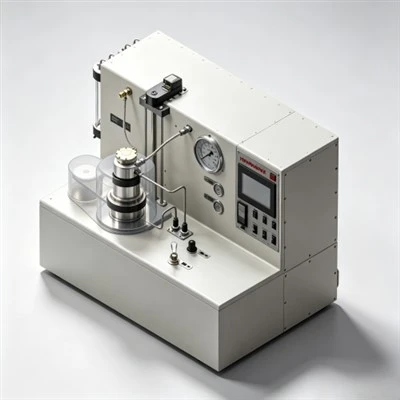
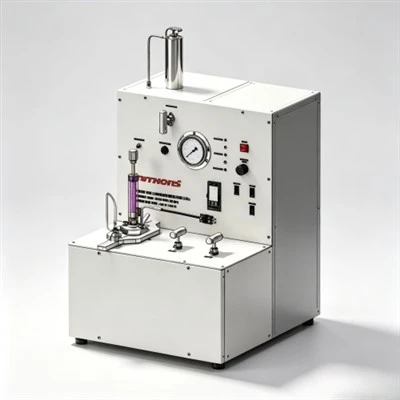
- Consistometer Thickening Time Profiling: Slurry samples are conditioned under simulated geothermal temperature and pressure ramp schedules. Thickening time to 70 Bc must equal planned placement duration plus an engineered 90 to 120-minute safety cushion.
- HPHT Stirred Fluid Loss Testing: Filtration volume is measured across a certified 325-mesh screen under 1,000 psi differential nitrogen pressure at bottom-hole circulating temperature (BHCT). Gas-tight production liners require filtration loss below 35 mL/30 min.
- Rotational Rheology Verification: Evaluate plastic viscosity and yield point on rotational viscometers across 600, 300, 200, 100, 6, and 3 rpm. Verify that the fluid maintains laminar displacement properties without inducing ECD surges.
- Free Fluid and Sedimentation Checks: Conditioned slurry poured into an undisturbed 250 mL glass cylinder must exhibit 0.0% free fluid breakout for gas-bearing and deviated intervals to prevent high-side water channeling.
Frequently Asked Questions (FAQ) Regarding Well Cementing Classifications
1. What is the fundamental operational difference between primary and squeeze cementing?
Primary cementing is the initial placement of cement slurry around casing immediately after it is run into a newly drilled open hole, using a continuous circulating path. Squeeze cementing is a targeted remedial operation where cement slurry is hydraulically forced under pressure through casing perforations or splits into isolated rock pores and micro-channels to repair leaks or shut off unwanted formation fluids.
2. When is liner cementing chosen over a full casing string?
Liner cementing is selected in deep drilling operations to reduce casing steel expenditure, lower rig hook loads, and bypass narrow pressure margin bottlenecks. By hanging the liner from the previous casing shoe rather than extending tubulars back to surface, operators save capital while successfully isolating deep, overpressured reservoir sections.
3. Why is stage cementing mandatory in weak, low-fracture-gradient formations?
Pumping a continuous column of heavy cement slurry across long vertical intervals generates excessive hydrostatic pressure. In weak or depleted formations, this hydrostatic pressure exceeds the rock's tensile fracture breakdown limit, inducing massive lost circulation. Stage cementing splits the cement column into two or more independent placement intervals using a stage collar (DV tool), keeping hydrostatic pressures safely below the fracture gradient.
Strategic Recommendations for Slurry Placement and Well Integrity
In modern energy development, achieving multidecade well integrity depends directly on mastering what are the different types of cementing in drilling. Integrating precision laboratory formulation, effective borehole conditioning, mechanical wiper plug sequences, and post-job acoustic logging eliminates downhole flash setting, prevents formation breakdown, and guarantees complete hydraulic containment.
KELIOIL remains committed to manufacturing high-performance oilfield cementing additives under strict ISO 9001 and API Spec 10A quality control standards. By combining state-of-the-art polymer synthesis with comprehensive laboratory testing support, KELIOIL empowers operating companies and service contractors worldwide to optimize chemical additive packages, eliminate downhole cementing failures, and ensure life-of-well asset integrity.
Optimize Your Wellbore Cementing Formulations with KELIOIL Additives
Our technical chemical specialists provide customized slurry formulation designs, API Spec 10A laboratory testing verification, and reliable bulk chemical supply of premium cementing additives tailored to demanding onshore and offshore drilling operations.