
How can drilling engineers execute flawless primary cementing operations to achieve reliable zonal isolation, structural casing support, and long-term wellbore integrity in complex downhole environments? In modern oil and gas extraction, primary cementing is the single most critical well construction phase. The core operational sequence involves meticulously mixing dry oil well cement with water and high-performance chemical additives to yield a uniform slurry, then pumping this fluid down through the casing string to displace drilling mud and fill the annular space across target zones or open-hole sections. Without precise slurry design, accurate cement volume estimation, and rigorous downhole pressure management, operations risk fluid channeling, casing failure, or severe formation damage. By examining volume calculations, additive selection, wiper plug mechanics, and laboratory testing protocols, operators can ensure sustained hydraulic sealing over the life of the well.
A comprehensive analysis of preparation steps, slurry additive chemistry, displacement mechanics, and laboratory evaluation protocols demonstrates how engineered field execution safeguards casing integrity and maximizes well production longevity.
1. Essential Preparation: Volume Estimation and Physical Property Testing
Executing a successful primary cementing job requires meticulous pre-job planning centered on two mandatory technical preparation tasks: open-hole volume determination and slurry physical property validation.
Determining Required Cement Slurry Volume
Accurate volumetric calculation prevents under-cementing (which leads to incomplete annular fill) or over-cementing (which causes excessive hydrostatic pressure and formation fracturing).
- Caliper Log Measurements: Wireline caliper logs continuously record the wellbore diameter across depth to identify washouts, hole enlargement, or tight spots.
- Multi-Finger Caliper Technology: Advanced multi-finger caliper tools combine mechanical contact fingers and acoustic measurement sensors to capture high-resolution 3D wellbore profiles, accurately computing the net open-hole annular volume.
Clarifying Physical Properties of the Cement Slurry
Before pumping cement into the wellbore, engineers must establish precise physical performance parameters matched to bottomhole temperature and pressure schedules.
- Slurry Density and Viscosity Control: Balancing slurry density is crucial to balance formation fluid pressure while avoiding hydraulic fracturing of fragile formations.
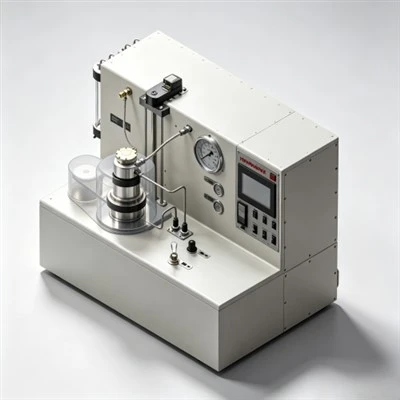
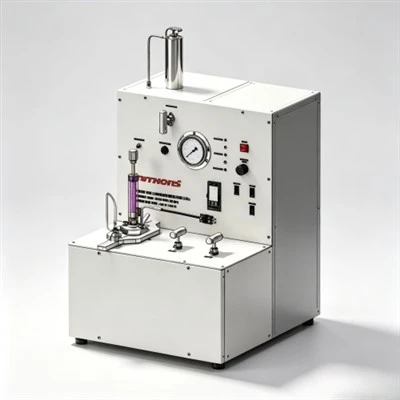
- Pre-Job Laboratory Qualification: Specialized cementing testing equipment validates that batch formulations, water quality, and additive dosages satisfy target thickening times and fluid loss specifications under simulated bottomhole conditions.
Related Technical Reading: Discover fundamental additive functions in What Is a Cementing Retarder: Fundamental Mechanisms and Dosage Control.
2. Slurry Mixing Equipment and Custom Chemical Additive Formulations
On-site preparation of primary cementing slurries relies on specialized mixing hardware, including hydraulic jet mixers, recirculating mixers, and batch mixing tanks, which homogenize dry API oil well cement with water and chemical treatments.
Core Additive Chemistries for API Cement Systems
Standard API Class A, G, or H cements are customized with functional chemical additives to match downhole demands:
- Hydration Accelerators: Specialized chemical compounds such as an early strength accelerator speed up C₃S hydration kinetics in low-temperature shallow casing strings, drastically shortening Waiting-on-Cement (WOC) time.
- Set Retarders: High-performance additives like a synthetic polymer retarder for oil well cementing delay cement setting during high-temperature deep well displacement.
- Density Control Agents: Microspheres and pozzolans lighten slurries for low-fracture zones, whereas hematite and barite weight slurries to control high formation pressures.
- Fluid Loss & Rheology Modifiers: Specialized fluid loss additives build tight micro-filter cakes to stop filtrate loss, while dispersants reduce viscosity for optimal displacement efficiency.
- Specialized Additives: Extenders increase slurry yield to lower overall cementing costs, defoamers eliminate entrained air during continuous mixing, and bridging materials seal active lost circulation zones.

State-of-the-Art Additive Manufacturing at KELIOIL Production Workshop
3. Technical Comparison Matrix: Additive Chemistries vs. Operational Parameters
Choosing the right chemical formulation is vital for ensuring slurry stability and placement safety during primary cementing.
| Additive Category | Typical Dosage | Operational Temp. | Key Chemical Mechanism | Primary Field Objective |
|---|---|---|---|---|
| Early Strength Accelerators | 1.0% – 3.0% BWOC | 15°C – 60°C | Catalyzes silicate hydration & Ca(OH)₂ precipitation | Reduces WOC time and accelerates shallow casing shoe strength. |
| Polymer Retarders (AMPS) | 0.2% – 2.0% BWOC | 90°C – 200°C+ | Adsorbs on cement grains & chelates Ca²⁺ ions | Prevents premature setting during long displacement in HPHT wells. |
| Polymeric Fluid Loss Control | 0.5% – 1.5% BWOC | Ambient – 180°C | Forms impermeable filter cake across pore throats | Prevents slurry dehydration, maintaining designed pumpability. |
| Defoaming Agents | 0.1% – 0.4% BWOC | Ambient – 200°C | Breaks air bubble surface tension in liquid phase | Ensures accurate density slurry measurement at surface blender. |
Related Technical Reading: Learn how precise fluid filtration control protects pay zones in Understanding Fluid Loss in Cementing: Mechanisms and Risks.
4. Pumping and Displacement Mechanics: Wiper Plug Execution
Once the casing string is in place, an L-shaped cementing head is mounted at the wellhead to receive slurry from high-pressure cementing pumps. Pumping execution relies on bottom and top wiper plugs to isolate fluids and clean the inner casing wall.
- Bottom Wiper Plug Placement: The bottom wiper plug is launched first, directly ahead of the cement slurry. As it travels down casing, elastomeric wipers wipe mud residue from the casing interior while physically separating drilling mud from the cement.
- Float Collar Seating & Rupture: The bottom plug lands on the float collar-a one-way check valve positioned near the bottom of the casing string. Increasing pump pressure ruptures a diaphragm inside the bottom plug, opening a path for cement slurry to flow out into the annulus.
- Top Wiper Plug Launch & Landing: After pumping the calculated slurry volume, the top wiper plug is launched and chased with displacement fluid (mud or water). The top plug pushes remaining cement out of the casing string. Landing the solid top plug onto the bottom plug signals displacement completion, prompting pump shutdown to let the cement cure statically.
Regional Application Case: Permian Basin Deep Intermediate Casing Cementing
Case Application: Deep Intermediate Casing Primary Cementing, Permian Basin (West Texas)

Regional Cementing Background in Permian Delaware Sub-Basin
Operations in the Delaware Sub-Basin of West Texas target deep unconventional tight-oil formations requiring long 9-5/8 inch intermediate casing strings installed through salt sections, weak depleted sands, and high-pressure gas intervals down to depths exceeding 4,500 meters.
Regional Operational Challenges in Depleted Sand and Salt Sections
The primary challenge involves navigating narrow drilling windows between severe lost circulation in depleted upper sands and high-pressure gas influx in lower formations. Salt beds require salt-saturated slurry chemistry to avoid borehole enlargement, while high bottomhole temperatures require extended slurry pumpability without retarding early compressive strength development at the casing shoe.
Technical Requirements for High-Performance Slurry Systems
- Design a two-stage lead/tail cement slurry system with salt compatibility for interval integrity.
- Utilize a high-performance polymer retarder for oil well cementing to maintain a 4.5-hour pumpable window at 125°C BHCT.
- Control HTHP fluid loss under 40 mL/30 min across permeable depleted formations using specialized fluid loss agents.
- Verify thickening curves and static gel strength development using laboratory testing equipment prior to pump-down.
How Integrated Chemical & Laboratory Solutions Secured Well Integrity
Field engineers used a 1.56 g/cm³ (13.0 ppg) salt-saturated lead slurry alongside a 1.92 g/cm³ (16.0 ppg) tail slurry treated with synthetic polymer retarders, early accelerators, and polymeric fluid loss reducers. Pre-job slurry thickening times and compressive strength growth were verified on a laboratory consistometer and ultrasonic cement analyzer. Dual wiper plugs ensured displacement efficiency.
Regional Application Case Results
- Successfully placed 1,400 sacks of cement slurry across the 2,200-meter casing annulus without fluid loss.
- Observed full cement returns to surface, verifying accurate hole volume estimation from multi-finger caliper logging.
- Achieved a 500 psi compressive strength at the casing shoe within 11 hours, saving 8 hours of rig WOC time.
- Ultrasonic cement bond logs confirmed 100% continuous zonal isolation across gas-bearing horizons.
5. API Laboratory Testing and Quality Assurance Procedures
To ensure flawless execution during primary cementing, all cement and additive formulations undergo strict testing per API Recommended Practice 10B-2.
- Pressurized Consistometer Testing: Simulates downhole pressure and thermal profiles on a high-pressure consistometer to generate predictable thickening time curves up to 100 Bearden units (Bc).
- HTHP Fluid Loss Evaluation: Evaluates filtrate leakage using standard laboratory fluid loss testers under 500 psi differential pressure to prevent slurry dehydration downhole.
- Rheometer Viscosity Profiling: Measures plastic viscosity and yield point across multiple rotational speeds to optimize pump rates and mud displacement efficiency.
- Ultrasonic Compressive Strength Analysis: Continuously tracks strength development in set cement to establish safe drilling-ahead timelines.
Frequently Asked Questions (FAQ)
What is the main objective of primary cementing in oil and gas wells?
The main objective is to establish permanent zonal isolation between formation strata, anchor and support the casing string, protect casing against corrosive formation fluids, and seal off high-pressure fluid or gas zones.
Why are wiper plugs essential during primary cementing operations?
Wiper plugs physically separate cement slurry from drilling mud inside the casing, preventing contamination. They also wipe residual mud from the inner casing wall and provide a positive pressure signal when displacement is complete.
How does a caliper log assist in cementing planning?
A caliper log measures the actual wellbore diameter along depth, allowing engineers to calculate exact hole volume, accurately estimate required cement slurry volume, and avoid costly volume underestimation or overestimation.
What is the difference between a cement accelerator and a cement retarder?
Accelerators speed up cement hydration to achieve quick setting in shallow, low-temperature zones, whereas retarders delay hydration to ensure sufficient pumping time during high-temperature deep well displacements.
Achieving Primary Cementing Excellence with Integrated Chemical and Testing Solutions
Executing successful primary cementing operations demands seamless integration between precision hole measurement, tailored chemical additive formulations, reliable wiper plug displacement, and rigorous API laboratory testing. By combining high-performance cement additives with advanced testing equipment, operators eliminate downhole risks, achieve reliable zonal isolation, and maximize long-term well productivity.
As global drilling operations target deeper horizons, higher thermal regimes, and challenging geological formations, engineered slurry systems remain key to casing security. Modern chemical additive technologies and precise laboratory validation empower operators to build durable wellbore barriers that resist thermal stress, mechanical fatigue, and chemical degradation throughout the entire lifecycle of the field.
Optimize Your Primary Cementing Design with KELIOIL & NITHONS Solutions
Explore our complete portfolio of API-compliant cementing additives and laboratory testing instruments engineered for high-performance well construction.
Explore Cementing Additives & Testing Equipment