
How do drilling engineers prevent rapid slurry dehydration and gas migration when pumping cement through high-temperature, permeable, or high-salinity downhole formations? In well construction, fluid loss additives-also designated as filtrate-reducing agents-play a pivotal role in maintaining slurry stability and ensuring long-term zonal isolation. When an unconditioned cement slurry contacts porous rock, the hydraulic pressure differential forces water out of the mixture into the formation matrix. This uncontrolled fluid loss leads to rapid slurry flash-setting, viscosity spikes, bridge formation, and incomplete annular cement placement. To counter these operational hazards, oilfield chemical manufacturers synthesize polymer, polyvinyl alcohol (PVA), and cellulosic additives tailored for specific temperature and salinity windows. By examining chemical performance trade-offs across salt tolerance, thermal resistance, rheology, air entrainment, and compressive strength development, operators can select the optimal filtration control agent for deep, high-pressure well construction.
A rigorous comparative analysis of AMPS, PVA, and cellulose chemistries demonstrates how tailored polymer selection mitigates downhole slurry dehydration, optimizes fluid rheology, and safeguards structural casing integrity.
1. Fundamental Mechanisms of Fluid Loss Control in Oil Well Cementing
During primary cementing operations, maintaining precise filtration control prevents differential sticking, annular gas channeling, and formation pore plugging.
The Mechanics of Slurry Dehydration Downhole
As cement slurry is pumped past porous sandstone or carbonate formations, the excess water phase (filtrate) escapes into the formation under hydrostatic and differential pumping pressures. Uncontrolled filtration causes the solid particles in the slurry to pack tightly against the formation wall, forming a thick, rigid filter cake that restricts slurry flow and increases equivalent circulating density (ECD).
How Filtrate-Reducing Agents Protect Zonal Isolation
High-performance cementing fluid loss additives dissolve or hydrate in the aqueous mixing phase to increase liquid viscosity, bind free water molecules, and adsorb directly onto cement grain surfaces. This chemical action builds a thin, flexible, low-permeability filter cake across porous media, locking free water inside the slurry and ensuring full annular fill along the entire casing length.
Related Technical Reading: Gain a deeper understanding of filtration control mechanics in Understanding Fluid Loss in Cementing: Mechanisms and Downhole Risks.
2. Comprehensive Comparison of Major Fluid Loss Additive Chemistries
Selecting the appropriate additive chemistry depends heavily on downhole bottomhole circulating temperature (BHCT), brine concentration, required slurry rheology, and compressive strength timelines.
A. Salt Resistance Evaluation across Brine Environments
Downhole formations often intersect thick evaporite salt domes or high-salinity brine zones. Dissolved sodium chloride (NaCl) and calcium chloride (CaCl₂) ions can collapse polymer chains, causing traditional additives to lose filtration control.
- AMPS Polymer Chemistries: Synthesized with 2-acrylamido-2-methylpropanesulfonic acid, AMPS polymer-based fluid loss additives feature strongly ionized sulfonate groups that remain fully hydrated in fresh water, brackish water, and saturated salt brines.
- Polyvinyl Alcohol (PVA) Chemistries: PVA-based products possess virtually no salt tolerance. High ionic strength causes PVA chains to salting-out and precipitate, rendering them ineffective in saline fluids.
- Cellulosic Chemistries: Hydroxyethyl cellulose (HEC) derivatives perform adequately in fresh water and low-concentration brines but undergo chain coiling and viscosity loss in high-salinity systems.
| Additive Chemical Type | Salt Resistance Rating | Applicable Brine Salinity Range |
|---|---|---|
| AMPS Polymer-based Additives | Superior Salt Resistance | Fresh water to saturated salt (30%+ NaCl/CaCl₂) |
| PVA-based Additives | Poor Salt Resistance | Fresh water only (<2% NaCl) |
| Cellulose-based Additives | Moderate / Low Salt Resistance | Low-concentration brine (<5% NaCl) |
B. Thermal Stability & Temperature Thresholds
Thermal degradation of organic polymers leads to chain scission, resulting in immediate slurry dehydration and potential well control emergencies in deep HPHT wells.
- AMPS Polymers (High Thermal Stability): Thermally stable monomer backbones allow AMPS copolymers to withstand bottomhole circulating temperatures up to 180°C (356°F) without thermal decomposition.
- PVA Additives (Low Thermal Threshold): Polymer chains degrade rapidly above 95°C (203°F), limiting PVA use to shallow casing strings and low-temperature conductor pipes.
- Cellulosic Derivatives (Moderate Thermal Threshold): Subject to thermal hydrolysis above 120°C (248°F), requiring additional thermal stabilizers for intermediate temperature applications.
| Additive Chemical Type | Temperature Resistance Rating | Maximum Operational BHCT |
|---|---|---|
| AMPS Polymer-based Additives | Excellent High-Temperature Stability | ≤180°C (356°F) |
| PVA-based Additives | Poor Temperature Resistance | ≤95°C (203°F) |
| Cellulose-based Additives | Moderate Temperature Resistance | ≤120°C (248°F) |
C. Slurry Rheology & Dispersibility Behavior
Maintaining low yield point and balanced plastic viscosity ensures turbulent flow placement without exceeding casing burst or formation fracture limits.
- AMPS Polymers: Modern synthetic AMPS formulations contain anionic functional groups that deliver inherent dispersibility. They help control fluid loss without inducing unwanted slurry thickening, generally eliminating the need for added dispersants.
- PVA Additives: PVA molecules tend to cross-link and gel the cement slurry, causing significant viscosity spikes that mandate chemical dispersants to maintain pumpability.
- Cellulosic Derivatives: High-molecular-weight HEC products suffer from limited water solubility and extreme viscosity-building tendencies, making high doses of dispersants essential to maintain slurry flowability.
| Additive Chemical Type | Rheological & Dispersibility Characteristics |
|---|---|
| AMPS Polymer-based Additives | Inherent dispersibility; maintains low friction pressure without requiring supplemental dispersants. |
| PVA-based Additives | Increases slurry viscosity; requires chemical dispersant additions to ensure pumpability. |
| Cellulose-based Additives | Poor hydration rate and high viscosity-building tendency; mandatory dispersant treatment needed. |
D. Foaming Characteristics & Air Entrainment
Air entrainment during continuous mixing compromises slurry density control and weakens set cement matrix density.
| Additive Chemical Type | Foaming Profile & Defoamer Requirement |
|---|---|
| AMPS Polymer-based Additives | Slight foaming tendency; easily controlled with trace defoamer concentrations. |
| PVA-based Additives | Generates substantial surface foam; requires high defoamer dosages, increasing slurry cost. |
| Cellulose-based Additives | Produces persistent micro-bubbles that resist defoamers, lowering set cement density and strength. |
E. Impact on Compressive Strength Development
Retardation of early compressive strength development delays casing shoe drilling and increases Waiting-on-Cement (WOC) non-productive time.
| Additive Chemical Type | Effect on Hydration & Compressive Strength |
|---|---|
| AMPS Polymer-based Additives | Minor impact on cement hydration; allows rapid early compressive strength development. |
| PVA-based Additives | Negligible effect on hydration kinetics and early strength growth. |
| Cellulose-based Additives | Extensive hydration delay; retards compressive strength growth, increasing WOC time. |
Related Technical Reading: Explore how retarder interactions affect set cement strength in What Is a Cementing Retarder: Fundamental Mechanisms and Dosage Control.
Regional Application Case: Deep High-Salinity Well Construction in Saudi Arabia
Case Application: Deep Gas Well Intermediate Casing Cementing, Rub' al Khali Basin (Saudi Arabia)

Geological & Operational Background
In the Ghawar perimeter and Rub' al Khali Basin of Saudi Arabia, deep gas exploration wells require cementing 7-5/8 inch liner strings through thick, evaporite salt formations and high-permeability sandstones at depths below 4,200 meters.
Downhole Operational Challenges
Operators face bottomhole circulating temperatures exceeding 150°C (302°F) coupled with saturated salt (28%–30% NaCl) washouts. Early attempts using conventional cellulosic and PVA additives led to severe polymer precipitation, slurry flash dehydration, stuck casing pipe, and failure to isolate gas-bearing sands.
Technical Slurry Requirements
- Maintain API HTHP fluid loss below 50 mL/30 min under 150°C and 500 psi differential pressure.
- Ensure complete chemical compatibility with saturated brine mixing water without polymer cross-linking.
- Maintain a pumpable 5-hour thickening window on a laboratory consistometer without inducing excessive slurry gelation.
- Achieve 1,000 psi compressive strength within 24 hours to prevent annular gas migration.
Engineering Solution & Applied Field Execution
Engineers deployed a high-performance synthesized AMPS terpolymer polymer fluid loss additive combined with a high-temperature retarder. Pre-job laboratory validation using pressurized HTHP filtration cells and consistometers confirmed an API fluid loss of 36 mL/30 min in saturated salt slurry at 155°C.
Field Performance & Zonal Isolation Results
- Successfully pumped and placed 850 sacks of 1.98 g/cm³ (16.5 ppg) salt-saturated slurry along the 1,100-meter liner section.
- Maintained smooth surface pumping pressure with zero pressure spikes caused by dehydration or viscosity building.
- Ultrasonic Cement Bond Logs (CBL/VDL) demonstrated 100% continuous hydraulic sealing across high-pressure gas zones.
- Eliminated WOC delays by achieving shoe compressive strength ahead of schedule, saving 12 hours of rig time.
3. Laboratory Testing Protocols for Fluid Loss Evaluation
Pre-job slurry testing under API Recommended Practice 10B-2 is vital to ensure that filtrate control agents satisfy field specifications.
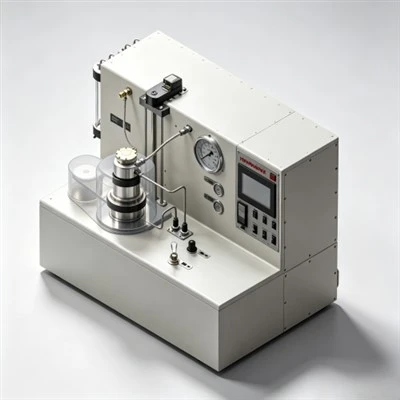
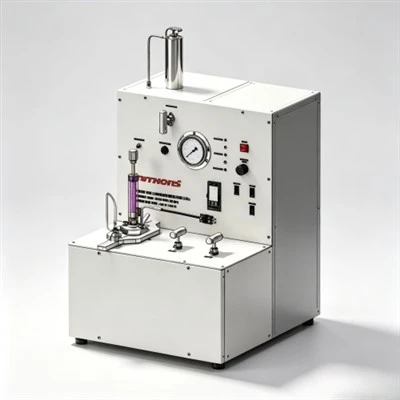
- HTHP Filter Press Testing: Uses high-pressure fluid loss testers operated under 500 psi differential pressure at bottomhole circulating temperature to record 30-minute filtrate volumes.
- Pressurized Consistometer Validation: Tracks slurry viscosity and thickening time on a laboratory consistometer to ensure filtration control agents do not trigger flash gelation.
- Free Fluid and Sedimentation Testing: Verifies that zero free water separates from the slurry, preventing top-of-cement channeling.
Frequently Asked Questions (FAQ)
What is the primary function of fluid loss additives in primary cementing?
Fluid loss additives prevent the water phase of a cement slurry from escaping into porous downhole formations. This preserves slurry water-to-cement ratios, maintains predictable rheology, and prevents bridge formation or flash setting during pumping.
Why are AMPS polymer fluid loss additives preferred in HPHT and high-salinity wells?
AMPS copolymers contain sulfonic acid functional groups that remain fully hydrated in high-salinity brines and resist thermal decomposition up to 180°C (356°F), providing reliable filtration control where PVA and cellulose fail.
How does uncontrolled fluid loss affect set cement performance?
Uncontrolled fluid loss dehydrates the slurry, causing premature gelation, incomplete annular displacement, micro-annular gas paths, poor bonding to casing and formation rock, and drastically reduced compressive strength.
Do cellulose-based fluid loss additives require additional chemical additives?
Yes. Cellulosic additives exhibit high viscosity-building tendencies and poor initial solubility, making dispersants mandatory to maintain acceptable slurry rheology. They also tend to trap air bubbles, requiring anti-foaming agents.
Optimizing Zonal Isolation with High-Performance Fluid Loss Control
Achieving complete zonal isolation in challenging downhole environments requires selecting the right filtrate-reducing chemistry matched to downhole temperature, salinity, and pressure constraints. While PVA and cellulosic options provide economical solutions for shallow, fresh-water applications, advanced synthetic AMPS polymer additives deliver the thermal stability, salt tolerance, and dispersibility necessary for complex deep-well construction.
Partnering with experienced oilfield chemical manufacturers ensures that every slurry system is custom-formulated and validated through rigorous API laboratory testing. By leveraging high-performance polymer additives and specialized laboratory evaluation tools, operators can safeguard wellbore integrity, eliminate annular fluid migration, and extend the productive lifespan of their oil and gas assets.
Optimize Your Slurry Designs with KELIOIL & NITHONS Solutions
Discover our high-performance AMPS polymer fluid loss additives and precision laboratory testing equipment designed for demanding global well cementing operations.
Explore Fluid Loss Additives & Testing Equipment