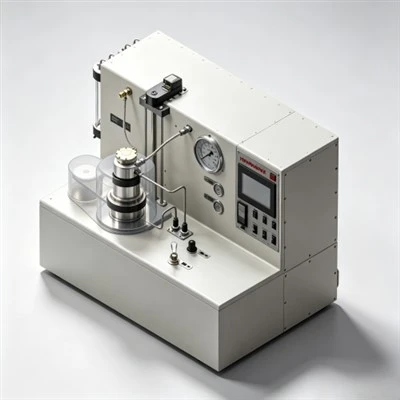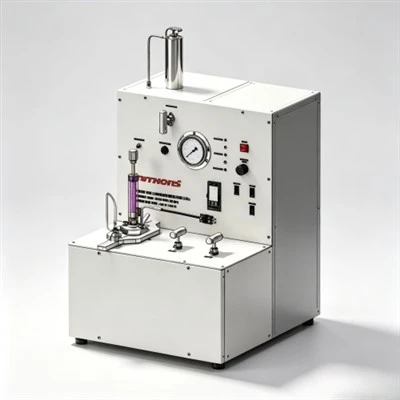

Understanding what is oil well cement requires analyzing specialized hydraulic cement formulations engineered specifically to withstand extreme downhole pressures, elevated bottomhole temperatures, and aggressive corrosive fluids encountered during oil, gas, and geothermal well construction. Unlike standard construction cement, what is oil well cement centers around strictly regulated Portland cement classifications that yield predictable slurry rheology, controllable thickening times, and rapid compressive strength development. As defined by API Spec 10A specifications, high-performance oil well cement slurries must maintain uniform suspension down thousands of meters into deep wellbores, isolate permeable hydrocarbon formations, and prevent subsurface gas migration. Utilizing chemically precise oil well cement guarantees reliable annular sealing, structural casing support, and long-term zonal isolation throughout the productive operational lifespan of the wellbore.
A comprehensive study of Portland clinker chemistry, API classifications, physical testing standards, hydration mechanisms, and specialized additive synergies demonstrates how technical cement formulations safeguard wellbore integrity under severe high-pressure high-temperature (HPHT) regimes.
1. Fundamental Clinker Chemistry and Mineral Phase Composition
To understand what is oil well cement at a molecular level, slurry engineers evaluate four primary crystalline mineral phases synthesized through high-temperature clinker calcination in industrial rotary kilns at temperatures reaching approximately 1,450°C (2,640°F). The chemical mineralogy directly dictates slurry pumpability, hydration kinetics, heat generation, and final compressive strength development.
The core chemical mineral phases governing oil well cement performance include:
- Tricalcium Silicate (C₃S / 3CaO·SiO₂): Comprises 45% to 65% of the cement clinker. Controls initial hydration kinetics, early strength development, and primary gelation during the first 28 days. C₃S reacts rapidly with water to form calcium silicate hydrate (C‑S‑H) gel and calcium hydroxide (Ca(OH)₂).
- Dicalcium Silicate (C₂S / 2CaO·SiO₂): Represents 15% to 35% of clinker mass. Hydrates slowly to drive long-term compressive strength buildup and ultimate structural density over months, contributing significantly to long-term well integrity.
- Tricalcium Aluminate (C₃A / 3CaO·Al₂O₃): Accounts for 0% to 15% of composition. Reacts rapidly with water, generating high hydration heat and rapid stiffening; strictly controlled in API cement classes to mitigate aggressive sulfate attack in subterranean environments.
- Tetracalcium Aluminoferrite (C₄AF / 4CaO·Al₂O₃·Fe₂O₃): Contributes 5% to 18% of clinker structure. Imparts chemical resistance against aggressive subsurface brine solutions and dictates the characteristic dark gray color of hydraulic cement.
Controlling the balance of these four phases is essential when manufacturing API Spec 10A compliant cements. For example, restricting the C₃A content below 3% produces High Sulfate Resistant (HSR) cement, which is vital for drilling through corrosive formation waters laden with dissolved magnesium and sodium sulfates.
Related Technical Reading: Explore how retarders control C₃S hydration timing in Understanding Retarders in Cementing: High-Temperature Thickening Control.
2. API Spec 10A Cement Classifications Matrix
Evaluating what is oil well cement involves classifying hydraulic cements into standardized grades based on depth capability, thermal resistance, surface area grind, and chemical sulfate resistance.
The standardized classification matrix below details operational parameters for API Spec 10A oil well cements:
| API Cement Class | Depth Window (ft / m) | Temperature Window (°C / °F) | Sulfate Resistance Grades | Primary Field Application |
|---|---|---|---|---|
| Class A | 0 – 6,000 ft (0 – 1,830 m) | Up to 80°C / 170°F | Ordinary (O) | Shallow casing strings where special performance properties are not required. |
| Class C | 0 – 6,000 ft (0 – 1,830 m) | Up to 80°C / 170°F | Ordinary (O), Moderate (MSR), High (HSR) | High-early-strength applications requiring rapid gelation and quick drilling turnaround. |
| Class G | 0 – 8,000 ft (0 – 2,440 m) base (Deeper with retarders) | Up to 110°C / 230°F base (Up to 200°C+ with silica) | Moderate (MSR), High (HSR) | Universal basic oil well cement; manufactured without additives to yield predictable response to chemicals. |
| Class H | 0 – 8,000 ft (0 – 2,440 m) base (Deeper with retarders) | Up to 110°C / 230°F base (Up to 200°C+ with silica) | Moderate (MSR), High (HSR) | Coarser grind universal oil well cement designed for high-density, low-water slurries. |
Systematic classification explains why Class G and Class H cements dominate global offshore and deep onshore wellbore construction projects worldwide. Their basic clinker state without added accelerators or retarders gives cementing engineers complete freedom to design custom slurry systems using chemical additives.
Related Technical Reading: Learn how fluid loss additives maintain water retention across porous zones in Understanding Fluid Loss in Cementing: Mechanisms and Risks.
3. Key Physical and Chemical Testing Standards (API RP 10B-2)
Defining what is oil well cement requires strict adherence to physical quality verification procedures specified under API RP 10B-2 laboratory testing standards. Field slurries are pre-tested under simulated bottomhole temperature and pressure schedules to ensure field success.
Core laboratory testing criteria governing oil well cement slurries include:
- Fineness & Specific Surface Area: Measured via Blaine air permeability testing (typically 280 – 340 m²/kg for Class G and Class H), ensuring predictable water demand, uniform particle distribution, and controlled reactivity.
- Thickening Time Window: Evaluated using pressurized consistometers simulating downhole BHCT and BHTP to determine exact pumpability limits expressed in Bearden units of consistency (Bc).
- Free Water & Sedimentation Control: Quantified in fluid column tests to prevent slurry settling, density stratification, channel formation, and top-of-cement strength degradation (target ≤ 1.0 mL).
- Compressive Strength Buildup: Measured using destructive crush tests or non-destructive Ultrasonic Cement Analyzers (UCA) to confirm structural support before drilling out casing shoes.
Related Technical Reading: Deepen your knowledge of dosage sensitivity and additive compatibility in What Is a Cementing Retarder: Fundamental Mechanisms and Dosage Control.
Regional Application Case: Middle East Onshore High-Sulfate Carbonate Reservoir Operations
Case Application: Intermediate Casing Zonal Isolation, Middle East Desert Basin
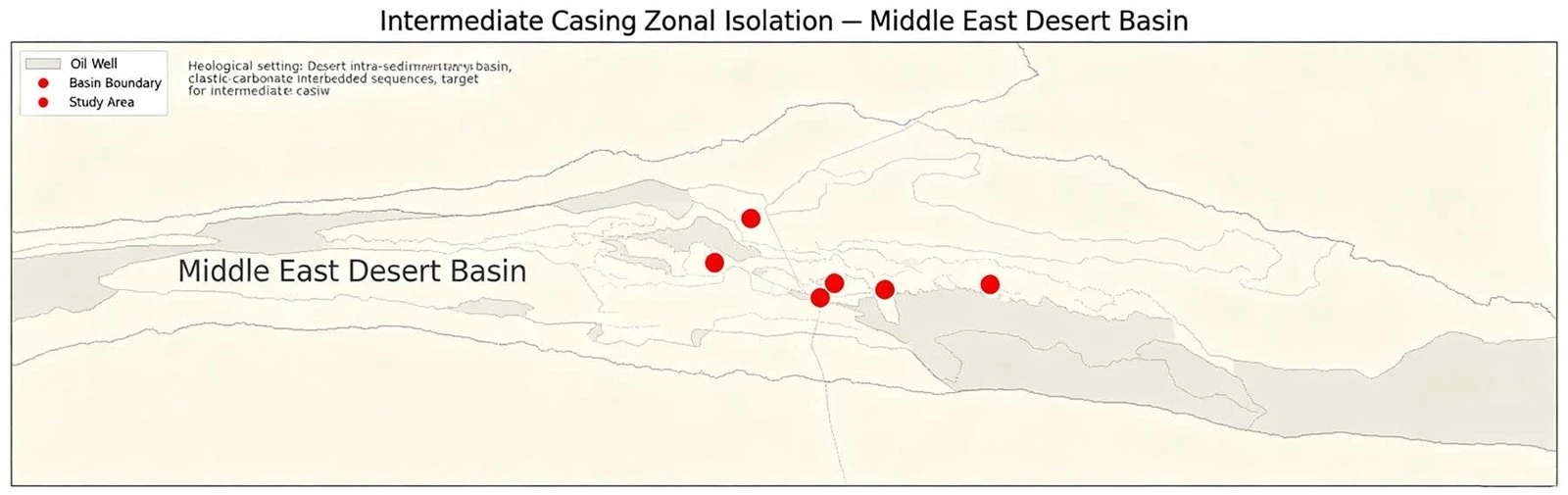
Regional Cementing Background in Middle East Carbonate Fields
Onshore operators drilling deep carbonate reservoirs encounter harsh subterranean environments containing high concentrations of hydrogen sulfide (H₂S), carbon dioxide (CO₂), and highly corrosive magnesium sulfate brines.
Regional Operational Challenges in Corrosive Subsea Formations
Standard construction cements rapidly deteriorate when exposed to aggressive subsurface brines, leading to casing corrosion, strength retrogression, and dangerous annular gas leaks behind intermediate casing strings.
Technical Requirements for High-Sulfate Oil Well Cement Slurries
To secure deep intermediate casing strings, field specifications typically demand:
- Utilizing certified API Class G High Sulfate Resistant (HSR) cement with strict C₃A limits (≤ 3%).
- Designing high-density, low-permeability slurries incorporating silica flour and fluid loss polymers to prevent brine ingress.
- Achieving rapid compressive strength buildup to seal off high-pressure carbonate water zones effectively.
How API Class G HSR Cement Secured Well Integrity
Engineered Class G HSR cement slurries modified with targeted chemical additives prevented chemical sulfate attack, provided robust mechanical casing support, and eliminated cross-flow gas migration behind the intermediate casing string.
Regional Application Case Results
Deploying specialized API Class G HSR cement delivers critical long-term performance benefits across severe brine environments:
- Prevents chemical expansion and micro-cracking caused by subterranean sulfate hydration reactions.
- Ensures durable, zero-permeability hydraulic sealing across high-pressure gas-bearing zones.
- Extends the structural and operational service life of the production wellbore beyond design expectations.
4. Additive Synergies: Customizing Cement Slurries for Downhole Environments
A complete understanding of what is oil well cement involves recognizing that neat cement slurries are rarely pumped without specialized chemical additives tailored to complex downhole conditions.
Key chemical additive groups combined with oil well cement include:
- Retarders: Lignosulfonates, hydroxycarboxylic acids, and synthetic AMPS polymers extend pumping windows in high-temperature wells.
- Accelerators: Calcium chloride (CaCl₂), sodium chloride, and inorganic salts speed up hydration in shallow, low-temperature formations.
- Fluid Loss Additives: Water-soluble polymers form protective micro-filter cakes to prevent slurry dehydration against permeable rock formations.
- Weighting Agents & Extenders: Barite and hematite increase slurry density for high-pressure control, while bentonite and microspheres reduce density for weak formations.
5. High-Temperature Strength Retrogression and Silica Stabilization
When oil well cement slurries are placed in deep wells where bottomhole static temperatures exceed 110°C (230°F), standard cement hydrates undergo a destructive phenomenon known as strength retrogression. Understanding this thermal transformation is vital for deep well construction.
At ambient and moderate temperatures, C₃S hydration produces calcium silicate hydrate (C‑S‑H) gel, which provides mechanical strength and low permeability. However, under high-temperature conditions, C‑S‑H converts into a crystalline mineral phase called alpha-dicalcium silicate hydrate (α‑C₂SH). This transformation results in severe volume shrinkage, increased permeability, and a loss of up to 50% of the cement's compressive strength over time.
To prevent strength retrogression, slurry engineers add 35% to 40% By Weight of Cement (BWOC) crystalline silica flour (SiO₂). At elevated temperatures, silica reacts with calcium hydroxide to alter the calcium-to-silicon (Ca/Si) ratio, converting the matrix into stable, high-strength crystalline minerals such as tobermorite and xonotlite. These silica-stabilized phases maintain mechanical integrity and zero fluid permeability even after decades of exposure to extreme HPHT downhole environments.
Frequently Asked Questions (FAQ)
How does oil well cement differ from regular construction Portland cement?
Oil well cement undergoes stricter grinding control, features tightly regulated chemical phase limits (especially low C₃A content), contains zero additive additions like air-entraining agents, and is tested under high temperature and pressure conditions following API Spec 10A.
Why is Class G cement considered the universal standard in oilfield operations?
Class G cement is manufactured as a basic ground clinker without added accelerators or retarders. This consistency allows slurry engineers to predictably customize its performance across a vast range of depths and temperatures using chemical additives.
What causes strength retrogression in high-temperature oil well cementing?
At temperatures above 110°C (230°F), the normal strength-giving C‑S‑H phase converts into a weak, permeable crystalline phase (alpha-dicalcium silicate hydrate). Adding 35% silica flour converts this into stable, strong crystalline phases like xonotlite.
What is the difference between Moderate Sulfate Resistant (MSR) and High Sulfate Resistant (HSR) cement?
MSR limits tricalcium aluminate (C₃A) content to maximum 8% to resist moderate sulfate exposure, whereas HSR restricts C₃A content to maximum 3% (or combined mineral limits) to withstand severe sulfate-bearing subsurface formations.
Establishing Superior Well Integrity with API Certified Oil Well Cement
Mastering what is oil well cement enables drilling and production engineers to select optimal hydraulic cement formulations tailored to challenging downhole profiles. By specifying high-grade API Spec 10A cements, rigorously testing physical slurry properties under API RP 10B-2 protocols, and blending targeted chemical additives, operators guarantee reliable structural support, prevent formation fluid migration, and secure long-term zonal isolation.
Source Premium API Spec 10A Certified Oil Well Cements
We supply high-performance API Class G and Class H oil well cements engineered for superior thermal stability and predictable additive response.
Explore Our Oil Well Cement Portfolio