
What is fluid loss additives for oil cementing and how do they ensure wellbore stability? Fluid loss additives for oil cementing are high-performance chemical agents formulated to control slurry water filtration into permeable subterranean formations during primary and remedial cementing operations. In oil field well construction, these specialized chemicals establish a dense, low-permeability hydration filter cake across exposed porous zone boundaries under hydrostatic pressure, effectively preventing flash dehydration, sudden rheological slurry thickening, and differential pipe sticking. When petroleum cementing engineers analyze fluid loss additives for oil cementing, they evaluate core operational capabilities including hydrophilic chain hydration swelling, micro-particulate bridging, surface slurry particle adsorption, and liquid-phase viscosity optimization. Deploying dynamic fluid loss additives for oil cementing maintains slurry pumpability, protects weak hydrocarbon reservoirs from filtrate contamination, and ensures long-term gas-tight zonal isolation in high-temperature deep wells.
A rigorous technical evaluation of fluid loss additives for oil cementing covers chemical additive classifications, multi-stage filtration control mechanisms, high-shear rheological stability, standard API RP 10B-2 testing methodologies, and real-world field application cases.
1. Primary Chemical Families of Fluid Loss Additives for Oil Cementing
Selecting suitable fluid loss additives for oil cementing depends on matching molecular structures with downhole circulating temperatures, bottomhole pressures, dynamic shear stresses, and mixing water salinity. Modern chemical solutions encompass natural modified biopolymers, cellulosics, and advanced synthetic polymers tailored for harsh downhole conditions.
The primary polymer classes used in fluid loss additives for oil cementing include:
- Cellulosic Polymers (CMC & HEC): Carboxymethyl cellulose (CMC) and hydroxyethyl cellulose (HEC) represent traditional water-soluble additives applied in low-to-medium temperature wells (up to 100°C / 212°F). They swell upon hydration to increase aqueous viscosity and encapsulate hydrating cement clinker grains.
- Synthetic AMPS-Based Copolymers: High-molecular-weight copolymers composed of 2-acrylamido-2-methylpropanesulfonic acid (AMPS) and acrylamide monomers provide thermal stability up to 230°C (446°F). Their sulfonate groups resist polyvalent calcium and magnesium ion attack in high-salinity brines.
- Water-Insoluble Polymer Resins: Synthetic resin blends form insoluble flexible micro-films under differential pressure, creating physical barriers across micro-fractures and high-permeability formation pores.
- Latex Polymeric Suspensions: Styrene-butadiene rubber (SBR) latex emulsions provide film-forming mechanisms that achieve near-zero fluid loss while improving post-set cement mechanical ductility and gas-blocking capacity.
Technical Knowledge Extension: To examine fundamental slurry water loss parameters and API fluid filtration limits, explore our engineering guide on measuring fluid loss of cement slurry during well operations.
2. Technical Performance Matrix: Chemical Comparison & Operating Limits
Optimizing fluid loss additives for oil cementing requires evaluating key performance parameters including thermal degradation thresholds, salt tolerance, dosage efficiency, shear thinning response, and compatibility with complimentary defoamers and retarders.
The table below highlights performance parameters for major categories of fluid loss additives for oil cementing:
| Polymer Chemical Family | Max Temperature Limit (°C / °F) | Typical Concentration (% BWOC) | Brine & Salt Tolerance | Primary Application Advantage |
|---|---|---|---|---|
| Modified Cellulose (HEC/CMC) | Up to 100°C / 212°F | 0.3% – 0.8% | Low (Flocculates in high Ca²⁺/Mg²⁺) | Cost-effective filtration control for shallow casing strings. |
| Modified Biopolymers & Starch | Up to 120°C / 248°F | 0.5% – 1.2% | Moderate (Up to 10% NaCl) | Good early filtration control with minimal set retarding effects. |
| Synthetic AMPS Copolymers | Up to 230°C / 446°F | 0.6% – 2.5% | High (Saturated NaCl & CaCl₂) | Superior high-temperature and salt stability in HPHT deep wells. |
| Polymeric SBR Latexes | Up to 180°C / 356°F | 1.5% – 4.0% (BWOB) | High (Requires non-ionic surfactant) | Near-zero filtration loss combined with elastic gas-migration control. |
Technical Knowledge Extension: For an in-depth analysis of high-temperature molecular working mechanisms, read our analysis on how fluid loss additives operate under high-pressure oilwell cementing conditions.
3. Core Filtration Control Mechanisms in Cement Slurries
Effective fluid loss additives for oil cementing operate through physical and chemical pathways that prevent interstitial aqueous phase separation as cement slurries encounter subterranean pressure gradients:
- Dynamic Filter Cake Deposition: As pressure forces mixing water toward permeable rock faces, polymer-coated cement grains lock together to construct a thin, highly impermeable surface filter cake, reducing water permeability down to fractional micro-darcies.
- Liquid-Phase Viscosification: Polymer chain networks expand within un-hydrated free water, increasing liquid viscosity. Higher filtrate viscosity restricts aqueous flow velocity through matrix pores according to Darcy's Law.
- Steric Particle Adsorption: Polymer functional groups bind directly onto the surface of hydration phase calcium silicate hydrate (C-S-H) particles, forming protective hydration shells that suppress particle agglomeration and maintain stable fluid rheology.
- Pore Throat Micro-Plugging: Elastic latex particles and micro-gel chains deform under pressure differential, plugging pore throats and preventing liquid migration into formation fractures.
4. Rheological Rheology & High-Shear Stability Engineering
The introduction of high-molecular-weight fluid loss additives for oil cementing inevitably influences slurry rheology, plastic viscosity, and yield point. During primary surface mixing and high-rate displacement pumping down the casing string, cement slurries experience extreme shear rates exceeding 1,000 s⁻¹. Chemical additives must exhibit pseudoplastic shear-thinning characteristics to allow low displacement surface pressures while quickly recovering sufficient structural viscosity under static conditions to prevent particulate settling.
Advanced synthetic fluid loss additives for oil cementing utilize rigid backbone monomers (such as N,N-dimethylacrylamide) that resist shear degradation. Unlike linear natural polysaccharides that undergo irreversible mechanical chain scission during passage through casing float equipment and restrictor nozzles, synthetic copolymer chains remain structurally intact, preserving filtration control throughout long displacement cycles in deep horizontal well sections.
Technical Knowledge Extension: Learn more about optimizing slurry additive chemical formulations in our companion review on fluid loss additive selection for oil well cementing slurries.
Regional Application Case: Middle Eastern High-Salinity Deep Reservoir Cementing
Case Application: Intermediate Casing Cementing in High-Salinity Deep Gas Well, Arabian Gulf

Regional Cementing Background in Deep Arabian Gulf Formations
Onshore deep gas development projects across the Arabian Peninsula involve drilling through thick anhydrite, salt dome formations, and highly permeable carbonate pay zones. Well depth targets exceed 4,800 meters (15,700 ft) with bottomhole static temperatures reaching 155°C (311°F) and mixing water sourced from high-salinity brackish field aquifers.
Regional Operational Challenges in Salt Formations
In high-salinity brine environments containing elevated Ca²⁺ ions, conventional cellulosic fluid loss additives for oil cementing suffer severe ionic suppression, leading to polymer coil collapse and rapid filtration loss. Slurry dehydration during liner circulation causes dynamic pressure spikes, fracturing fragile limestone formations and causing catastrophic mud losses.
Technical Requirements for High-Salinity Cement Systems
Regional operating standards required an engineered slurry system meeting stringent criteria:
- API HPHT fluid loss values held under 40 mL/30 min at 155°C and 1,000 psi differential pressure.
- Total stability in salt-saturated mixing water (exceeding 18% NaCl and 2,500 ppm Ca²⁺).
- Maintaining low plastic viscosity during 5-hour long liner displacement operations.
- Rapid early compressive strength development (1,500 psi in 24 hours) without strength retrogression.
How Advanced Synthetic Additives Secured Wellbore Integrity
Engineering teams incorporated salt-resistant synthetic AMPS-based fluid loss additives for oil cementing combined with defoamers and high-temperature lignosulfonate retarders. The sulfonic functional groups maintained ionic repulsion, ensuring polymer expansion even in brine.
Regional Application Case Results
The field deployment delivered total operational success:
- Maintained stable API fluid loss at 28 mL/30 min throughout placement operations.
- Prevented slurry dehydration and annular bridging, completing full displacement without pressure spikes.
- Ultrasonic Cement Analyzer (UCA) logs verified 100% continuous hydraulic sealing across carbonate gas zones.
5. Laboratory Testing Protocols for Fluid Loss Additives (API RP 10B-2)
Standardized laboratory verification under API RP 10B-2 is mandatory before field pumping of fluid loss additives for oil cementing.
Standard laboratory procedures include:
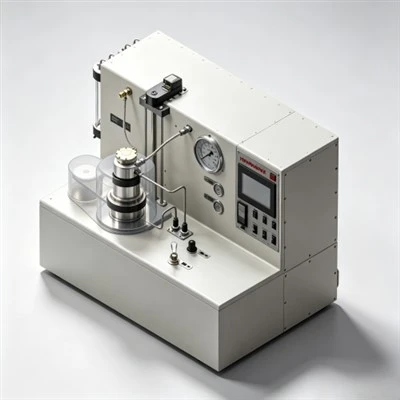
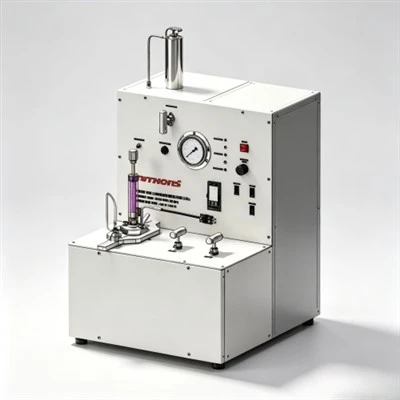
- HPHT Filter Press Evaluation: Measures filtrate volume collected through a 325-mesh screen under 1,000 psi (6.89 MPa) differential pressure and circulating temperature. Test duration spans 30 minutes, with initial spurts recorded separately to quantify early cake deposition rates.
- Pressurized Consistometer Thickening Time: Verifies that additives maintain stable slurry consistency without accelerating or retarding setting times beyond target pumping windows.
- Free Water & Sedimentation Analysis: Confirms zero supernatant free fluid separation and uniform slurry density profile across vertical static columns.
- Static Gel Strength Transition Testing: Monitors the time window during which slurry transitions from 100 lbf/100 ft² to 500 lbf/100 ft² to ensure short static transition periods that eliminate gas channel formation.
Frequently Asked Questions (FAQ)
Why are fluid loss additives critical in primary oilwell cementing?
Without fluid loss control, slurry mixing water rapidly drains into porous formations, causing dehydration, flash gelation, incomplete annulus fill, and loss of zonal isolation.
How do synthetic AMPS polymers outperform cellulose in high-salinity wells?
AMPS synthetic polymers contain non-ionic and strongly ionic sulfonate functional groups that remain stable in salt brine, whereas cellulose chains degrade or collapse in high divalent ionic environments.
Can fluid loss additives cause excessive slurry viscosity?
Over-dosing high-molecular-weight polymers can increase plastic viscosity. Modern formulations use dispersants to maintain optimal fluid rheology while keeping filtration low.
Ensuring Long-Term Well Integrity with Engineered Fluid Loss Additives
Deploying high-performance fluid loss additives for oil cementing is necessary to maintain slurry stability, protect hydrocarbon formations, and establish leak-free zonal isolation in complex oil and gas wells. By matching polymer chemistry to downhole temperature and brine parameters, drilling operators ensure smooth well completions and long-term production safety.
Optimize Your Oil Well Cementing Formulations Today
We manufacture high-grade fluid loss additives and cementing chemicals compliant with API Spec 10A standards for global oilfield operations.
Get Pricing for Fluid Loss Additives